
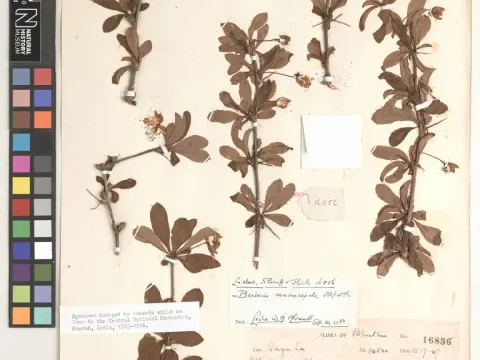
Berberis macrosepala
Berberis macrosepala
Berberis macrosepala is a distinct botanical species belonging to the Berberidaceae family. Originating from mountainous and semi-arid regions of Central Asia, this shrub is highly valued for its resilience to harsh environmental conditions and its unique visual appearance.
What the section contains
Berberis macrosepala
Regarding soil requirements, the plant thrives in well-draining, slightly alkaline or neutral substrates. It is essential to avoid sites with standing water, as the root system of this species is highly susceptible to rot under excessive moisture conditions found in heavy clay soils.
Climate adaptation is a key strength of this species. It prefers full sun exposure to maintain optimal physiological functions and decorative traits. While drought-tolerant once established, young specimens require irrigation during the first growing seasons to support root development.
The morphology of Berberis macrosepala is defined by its characteristic large sepals and armed branches. Its leaves are generally coriaceous, providing a natural defense mechanism against evaporation in high-altitude, windy environments where the plant naturally resides.
The primary economic use of this plant is within ornamental horticulture and landscaping. Its ability to form dense, protective thickets makes it an excellent candidate for functional hedges, while its berries serve as a source of medicinal extracts and dietary additives.
The most common pathological threats include fungal infections such as rust and powdery mildew. These diseases typically manifest during periods of high relative humidity when air movement within the foliage is restricted.
Pest pressure is mainly exerted by aphids and various caterpillars that target the soft tissue of the leaves. Integrated pest management, involving proper pruning to improve aeration and the use of targeted insecticides, remains the standard control measure.