
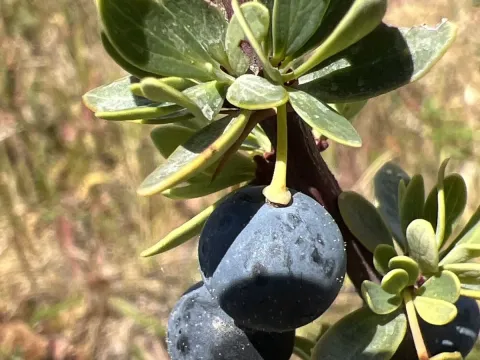
Berberis microphylla
Berberis microphylla
Berberis microphylla is a perennial evergreen or semi-evergreen shrub belonging to the Berberidaceae family. Originating from the southern regions of South America, particularly Patagonia, it is well-adapted to harsh climates and windy conditions.
What the section contains
Berberis microphylla
The plant thrives in sunny, open areas with excellent soil drainage. It is highly drought-tolerant once established but requires careful moisture management during the initial growth phase to ensure deep root development.
Regarding soil preferences, it prefers neutral to slightly acidic loams. In heavy or compacted soils, adding organic matter or sand is essential to prevent water stagnation, which can lead to root diseases.
The climate requirements are relatively broad, as the species is hardy in its native habitat. When cultivated in cooler regions, young plants may require supplemental protection during the first few winters to avoid frost damage.
Agricultural management involves regular pruning to maintain the desired shape and improve airflow within the canopy. Annual fertilization, focusing on a balanced NPK ratio in early spring, supports healthy vegetative growth.
The economic value of Berberis microphylla lies in its fruit production and decorative utility. The berries are valued for their high acidity and vitamin content, making them suitable for processing into jams and syrups.
In addition to food production, the plant serves a vital role in landscaping. Its dense, thorny nature makes it an excellent choice for impenetrable hedge rows that provide privacy and wind protection.
The pharmaceutical industry utilizes the bark and roots of this shrub for the extraction of berberine, an alkaloid with known health benefits. Sustainable harvesting techniques are employed to maintain the plant's health.
The efficiency of cultivating this crop is enhanced by its relative resilience. With proper site selection, input costs remain low while providing a consistent annual yield for commercial or personal use.
As a versatile crop, it offers multiple revenue streams, from berry processing to nursery sales for landscaping. Integrated farm management ensures optimal output and longevity of the plantings.
Fungal infections, particularly powdery mildew and rust, are common threats. These pathogens flourish in conditions with high humidity and poor air circulation, necessitating regular canopy thinning.
Pests such as the barberry aphid can cause significant damage to young foliage. Integrated pest management strategies, including the use of beneficial insects or selective insecticides, are recommended for control.
Sawflies represent another risk, as they can defoliate plants rapidly during the active growing season. Regular scouting and immediate intervention are necessary to mitigate large-scale damage to the foliage.
Root rot is often a consequence of poor irrigation practices or inadequate soil drainage. Preventing waterlogged conditions is the primary defense against these destructive soil-borne pathogens.
Preventive maintenance involves removing fallen leaves and debris in the autumn to minimize the overwintering sites for pests and diseases. Regular fungicidal sprays before the flowering stage can also improve plant resilience.
Harvesting Berberis microphylla berries occurs when they are fully ripe and have reached their characteristic color. It is best to harvest in the morning after the dew has evaporated to ensure long-term stability of the fruit.
Due to the sharp thorns, harvesting requires careful handling and the use of protective gear. Mechanical harvesters or specialized rakes can be used in larger plantations to improve efficiency while minimizing berry damage.
Post-harvest processing involves cleaning and sorting the berries. Drying is the most common method of preservation, requiring controlled temperatures to prevent moisture-related rot and degradation of active compounds.
Storage should be in cool, dark, and dry conditions to maintain the quality of the harvest. Proper ventilation is essential to avoid the buildup of moisture within stored containers.
Effective harvest management contributes to the overall health of the shrub. By ensuring that all fruit is picked and diseased berries are removed, farmers can minimize the spread of future infections.