
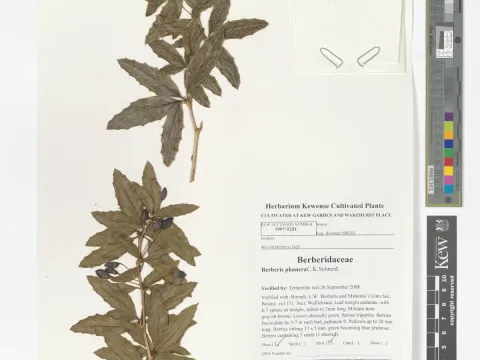
Berberis phanera
Berberis phanera
Berberis phanera is a distinctive shrub belonging to the Berberidaceae family, native to specific high-altitude mountain regions in China. It is highly valued in horticultural circles for its dense, leathery foliage and its architectural form that remains attractive throughout the year.
What the section contains
Berberis phanera
The cultural requirements for this plant focus on well-draining, nutrient-rich soil. It thrives best in environments where the soil pH is slightly acidic to neutral. Ensuring the substrate is not waterlogged is essential, as the species is susceptible to root rot if moisture levels are poorly controlled.
In terms of light exposure, Berberis phanera prefers locations with partial shade or filtered sunlight. While it can tolerate more exposure, intense afternoon sun may scorch the leaves in drier climates, necessitating regular irrigation during summer months.
Good agricultural practice for this shrub involves seasonal fertilization during the spring to support vigorous growth. Mulching the base of the plant with organic matter helps to retain essential soil moisture and suppresses competitive weed species in the immediate growing zone.
The horticultural utility of this species is largely decorative. It serves as an excellent specimen plant or part of a mixed hedge, contributing structural beauty to gardens that emphasize naturalistic design and high biodiversity.
The most common disease affecting this shrub is powdery mildew, particularly in environments with high humidity or poor air circulation. Implementing proper spacing between individual plants can significantly mitigate the risk of fungal outbreaks.
Insect pests, specifically aphids, frequently colonize the tender tips of new growth. Monitoring for signs of curling leaves or sticky residue allows for early intervention, preferably using gentle, environmentally friendly insecticidal soaps.
Root system health is paramount, as the species can be vulnerable to soil-borne pathogens. Avoiding deep cultivation around the root ball is recommended, as this can damage sensitive root hairs and create entry points for soil infections.
Environmental stress, such as extreme winter temperatures, can sometimes result in die-back of the tips. Pruning back dead or damaged wood in late spring helps the plant recover and maintains a compact, aesthetic form.
Overall, Berberis phanera is considered a relatively robust plant when situated in its ideal ecological niche. Regular seasonal inspections and adherence to standard horticultural hygiene are sufficient to keep the shrub in peak condition.