
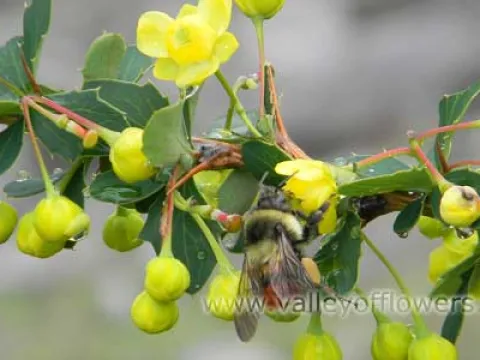
Jaeschke's Barberry
Berberis jaeschkeana
Jaeschke's Barberry (Berberis jaeschkeana) is a perennial deciduous shrub belonging to the Berberidaceae family. Originating from the mountainous regions of the Himalayas, this species has evolved to thrive in rocky and nutrient-poor alpine environments.
What the section contains
Jaeschke's Barberry
The plant is known for its hardiness and preference for well-drained soil types. It performs best in substrates ranging from sandy loam to rocky clay, provided there is efficient drainage to prevent waterlogging, which the root system is highly sensitive to.
In terms of climate requirements, the species favors sunny locations where it can receive maximum light exposure. Adequate sunlight is essential for maintaining the shrub's compact growth habit and ensuring the healthy development of its characteristic berries.
Cultural practices include periodic pruning, which is necessary to maintain the plant's structural integrity and promote dense foliage. Young specimens should be watered consistently until established, while mature plants are highly drought-tolerant.
The shrub is primarily utilized in landscape architecture. Its dense, thorny branches make it an ideal candidate for security hedging and ornamental landscaping, where it serves as a robust and visually appealing element of the garden structure.
Common botanical threats include fungal infections such as powdery mildew, which can affect foliage density in humid environments. Proper site selection and good airflow through the canopy are the most effective preventive measures against these pathogens.
Insect pests, specifically aphids and certain moth larvae, can occasionally cause damage to the tender growth of the shrub. Integrated pest management strategies, including monitoring and biological control, are recommended to maintain plant health throughout the season.