
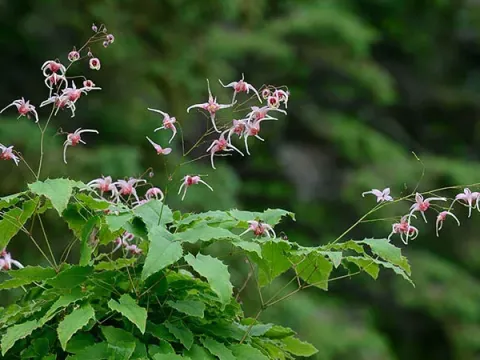
Hybrid barrenwort
Epimedium hybrids
Hybrid barrenwort (Epimedium hybrids) consists of a diverse group of perennial herbaceous plants belonging to the Berberidaceae family. These plants are widely appreciated for their architectural foliage and delicate, spur-shaped flowers that appear in early spring.
What the section contains
Hybrid barrenwort
Originating from cross-breeding various wild species from Asia and Europe, these hybrids have been selected for their garden performance, combining the hardiness of woodland species with an extended range of flower colors and improved vigor.
These plants are primarily woodland dwellers and require shady or semi-shady conditions to thrive. They are excellent candidates for planting under large deciduous trees, where they benefit from filtered sunlight and moist, leaf-mold-rich soil.
Regarding soil requirements, they perform best in well-draining, slightly acidic to neutral soil. Poorly drained, heavy clay soils are detrimental to their health, often leading to crown rot, so soil amendment with organic matter is highly recommended during planting.
Maintenance is relatively straightforward; they are low-maintenance perennials once established. They are known for their tolerance of dry shade, although providing supplemental water during prolonged summer droughts will help keep the foliage looking fresh.
One of the primary threats to hybrid barrenwort is excess soil moisture, which creates an environment conducive to root and crown rot. Proper site selection and soil structure are essential to mitigate this risk throughout the growing season.
Foliar fungal diseases, such as leaf spots, can occasionally occur in humid environments. To prevent these, gardeners should prune away old, tattered foliage in early spring before new growth emerges, which also helps improve air circulation.
Slugs and snails are the most significant pests for these perennials, particularly when young leaves emerge in spring. Implementing physical barriers or using organic baits can effectively minimize damage to the foliage.
Aphids might occasionally colonize the flower spikes; however, they rarely reach levels that would jeopardize the plant's overall health. If infestations are significant, a mild insecticidal soap can be used for control.
By ensuring that the plants have adequate space to prevent overcrowding and keeping the surrounding garden bed clean, the need for intervention is greatly reduced, making this a reliable and long-lived garden perennial.