
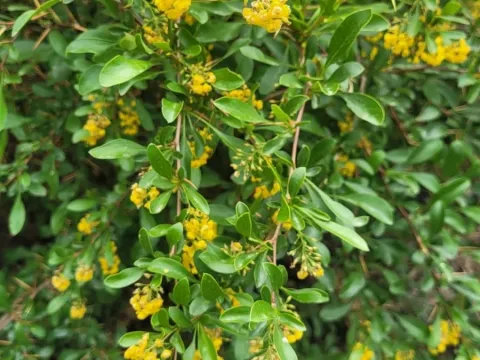
Ili barberry
Berberis iliensis
The Ili barberry (Berberis iliensis) is a rare shrub species belonging to the Berberidaceae family, endemic to the foothills of the Trans-Ili Alatau. It is a highly specialized plant that has evolved to thrive in the harsh, arid mountain environments of Central Asia.
What the section contains
Ili barberry
The species grows naturally on stony slopes and gravelly soils, exhibiting remarkable resilience to low nutrient levels and seasonal drought. Its root system is deeply embedded in the rocky substrate, allowing the shrub to access deep moisture layers throughout the vegetation period.
Climatic requirements for this species are characterized by high solar radiation and significant temperature variations between day and night. It is well-adapted to continental climates with cold winters and hot, dry summers, provided that the soil has excellent drainage capacity.
In cultivation, this plant requires minimal irrigation and is susceptible to root rot if grown in heavy or waterlogged soils. It performs best in well-aerated, rocky, or sandy substrates that mimic its natural mountain habitat, where stagnant water is non-existent.
Agricultural management should focus on maintaining the plant's natural form. Pruning is typically reserved for sanitary purposes, such as removing dead wood or clearing branches to ensure optimal airflow within the shrub, which is crucial for its long-term health and vitality.
The primary threats to the species involve habitat loss due to land development and overgrazing in its native range. Being an endemic species with a limited distribution, it requires careful conservation management to ensure its survival in the wild.
Fungal diseases, particularly rust, pose the most significant threat to the health of the plant. Maintaining adequate spacing between individual shrubs and ensuring the surrounding area remains clear of excessive weeds can help reduce the humidity around the foliage.
Pests such as aphids and leaf-eating moths can cause localized damage to the foliage and buds during the spring growth phase. Integrated pest management, focusing on biological controls and manual removal, is preferred over the heavy use of synthetic insecticides.
Powdery mildew can occur in years with high humidity or poor ventilation in the canopy. Pruning strategies should prioritize thinning out the inner branches to enhance light penetration and airflow, which naturally inhibits the development of these fungal pathogens.
Given its status, conservation efforts for the Ili barberry often emphasize the protection of wild populations over extensive agricultural exploitation. When cultivated, it serves primarily as an ornamental specimen or a subject for research into drought-resistant flora.