
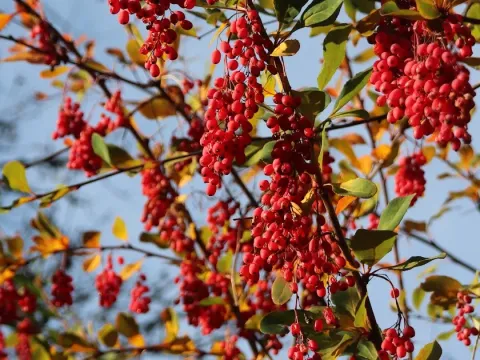
James barberry
Berberis jamesiana
Propagation of Berberis jamesiana is typically performed through vegetative methods, such as semi-hardwood cuttings during mid-summer, to ensure the offspring retain all the parent's desirable characteristics.
What the section contains
James barberry
Seed propagation is also possible, although it requires autumn sowing to allow for natural cold stratification during winter months. Seeds sown in spring often show lower germination rates without prior treatment.
Young plants should be transplanted into open ground either in early spring before growth begins or in late autumn, roughly one month before the ground freezes.
Planting holes should be prepared with dimensions of approximately 50x50x50 cm, filled with a nutrient-rich mix of loam, compost, and coarse sand to ensure proper drainage for the root system.
When planning a landscape arrangement, maintain a distance of at least 1.5 to 2 meters between individual shrubs to allow for the development of a healthy crown and sufficient air circulation.
Berberis jamesiana belongs to the Berberidaceae family and is a deciduous shrub native to the mountainous regions of Western China, well-adapted to temperate climates with distinct seasonal changes.
This species requires a significant amount of direct sunlight to thrive; planting in shaded areas often results in poor fruit production and less vibrant foliage color throughout the growing season.
The soil requirements are relatively flexible, though the shrub performs best in light, well-draining loamy soils with a neutral or slightly alkaline pH level. Heavy clay soils should be amended with organic matter or gravel.
Watering should be balanced, as the plant is sensitive to waterlogged conditions. During prolonged drought, supplemental irrigation at the base of the shrub is beneficial, avoiding wetting the leaves to prevent disease.
Regular fertilization is recommended; a balanced organic fertilizer applied in early spring followed by a potassium-phosphorus boost during the peak growing season supports robust development.
The primary concern for James barberry is powdery mildew, which often develops in conditions with high humidity and stagnant air. Management involves applying appropriate fungicides and thinning the crown to improve ventilation.
Common insect pests include aphids and barberry moth larvae. These pests can cause leaf curling or damage to the fruit, so regular monitoring during the budding and flowering stages is essential for control.
Preventative measures, such as applying horticultural oils or mild insecticides early in the season, can significantly reduce pest populations before they cause visible damage to the shrub.
Sanitary pruning, which involves the removal of dead, diseased, or overcrowded branches, is critical for maintaining the plant's overall health and reducing the risk of fungal outbreaks.
It is advisable to avoid planting Berberis jamesiana near susceptible hosts of rust diseases, as the shrub can become a target for these pathogens under specific environmental conditions.
The fruits of Berberis jamesiana are elongated, bright red berries that ripen toward the end of summer. These berries add significant ornamental value, often persisting on the branches well into the autumn.
Harvesting should be timed when the berries reach full maturity and firmness. They can be consumed fresh or utilized in culinary applications such as preserves, sauces, or dried fruit additions.
Care must be taken during the harvesting process to avoid damaging the fruiting buds for the following year. Proper drying techniques can extend the shelf life and usage of the harvested berries.
The plant is highly valued in horticulture for its dual purpose: providing striking autumn interest and producing harvestable berries that are rich in vitamins and organic acids.
With its high content of vitamin C and unique flavor profile, James barberry is recognized not only for its aesthetic appeal but also for its utility in traditional medicine and modern food preparation.