
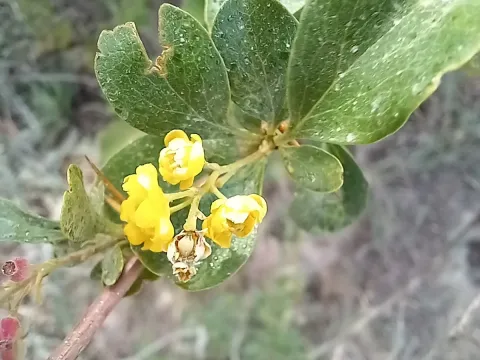
Integerrima barberry
Berberis integerrima
Propagation of Berberis integerrima is effectively achieved through seed sowing in late autumn or by softwood cuttings during the early summer months. Seeds generally require a period of cold stratification to overcome dormancy before spring germination.
What the section contains
Integerrima barberry
When sowing seeds directly in the field, a shallow planting depth of about 1-2 centimeters is recommended. Consistent moisture management is crucial during the first weeks of germination to ensure the development of a robust root system.
Cuttings should be harvested from healthy parent plants in June. Utilizing rooting hormones and a high-humidity environment under greenhouse conditions significantly increases the survival rate and establishment of new seedlings.
Young plants should be carefully transplanted to their permanent growing sites once they show sufficient lignification of stems. Adequate spacing is necessary to allow for long-term growth and structural development of the shrub.
Sunlight exposure is a primary requirement for the healthy growth of this species. Selecting an open, well-lit location will result in higher foliage quality and better resilience against environmental stresses.
Berberis integerrima is a hardy deciduous shrub belonging to the Berberidaceae family. Originating from the arid mountain regions of Central Asia, it has evolved to thrive in challenging, dry environments with minimal water input.
This species performs best in well-drained, slightly alkaline to neutral soil types. It is particularly well-suited to rocky or calcareous substrates, where its deep root system can access essential nutrients efficiently.
The plant demonstrates remarkable tolerance to extreme temperature fluctuations. It remains productive and healthy under intense summer heat and demonstrates excellent winter hardiness, making it a reliable choice for various climates.
Routine pruning is essential for maintaining plant health and productivity. By thinning the internal branches, gardeners can improve airflow, which prevents moisture accumulation and reduces the risk of fungal infections.
- Full sun exposure for optimal growth.
- Well-drained soil to prevent root rot.
- Periodic pruning for structural maintenance.
Powdery mildew is a common concern, particularly in areas with poor ventilation. Implementing a proper spacing strategy and ensuring the canopy remains open are the primary cultural methods for preventing this disease.
Rust diseases may occasionally appear on the foliage during humid seasons. It is important to inspect the plant regularly and remove any infected leaves promptly to prevent the spread of fungal spores throughout the plantation.
The barberry aphid is a notable pest that thrives in warm, dry weather. These insects can cause significant leaf curling and stunt plant growth, necessitating the use of targeted insecticide sprays if populations become invasive.
Leaf-eating caterpillars may also affect the foliage, although their impact is usually localized. Manual removal or the application of biological pesticides is often sufficient to control minor outbreaks and protect the plant's health.
Providing a balanced environment with optimal airflow and drainage is the most effective defense strategy. Healthy, well-nourished plants exhibit a natural resistance to many common threats and pests.