
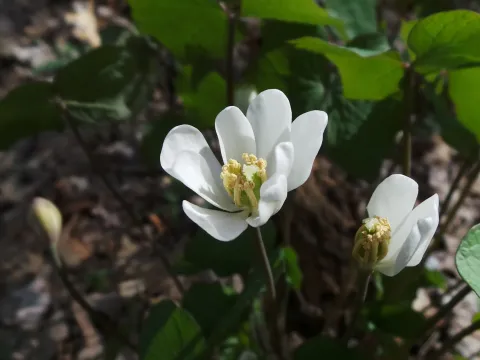
Jeffersonia
Jeffersonia
Jeffersonia is a genus of perennial herbaceous plants belonging to the Berberidaceae family. The genus is notable for its limited species diversity, primarily represented by Jeffersonia dubia and Jeffersonia diphylla, which are native to the temperate forest regions of East Asia and North America.
What the section contains

Jeffersonia
In cultivation, these plants thrive in cool, shaded environments that mimic their natural woodland habitat. They require humus-rich, moisture-retentive, yet well-drained soil. Providing the right substrate is crucial for the health of their shallow, fibrous root systems.
Botanically, Jeffersonia is recognized by its distinctively lobed or twin leaves and solitary, delicate flowers that emerge early in the spring. The foliage typically remains attractive throughout the season, adding aesthetic value to the shaded areas of a garden landscape.
The agricultural and horticultural use of Jeffersonia is primarily decorative. It is highly valued by collectors for its early bloom and ability to provide a naturalistic forest look in rock gardens or shaded borders. It is a hardy perennial capable of enduring cold winters.
Good horticultural practice involves minimal soil disturbance and the use of natural mulch, such as leaf mold. This mimics the forest floor, helps suppress weeds, and maintains the consistent soil moisture levels necessary for the optimal physiological development of the plant.
The main pathology associated with Jeffersonia is fungal decay, often resulting from poor drainage or excessively dense, waterlogged soil. Proper site selection and the incorporation of drainage materials are the best ways to mitigate these risks and prevent root rot.
Garden pests such as slugs and snails are the most frequent threats, especially to the tender young foliage appearing in early spring. Controlling these pests through physical barriers or environmentally friendly methods is standard procedure to preserve the integrity of the plant.