
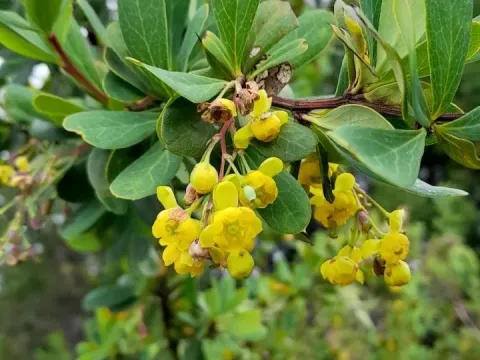
Holst's barberry
Berberis holstii
Holst's barberry (Berberis holstii) is a large evergreen or semi-evergreen shrub belonging to the family Berberidaceae. This species is native to the mountainous regions of East Africa, where it thrives in natural environments on high-altitude plateaus.
What the section contains
Holst's barberry
The plant has moderate climatic requirements, preferring well-lit areas with protection from strong, cold winds. Despite its African origins, the species demonstrates a degree of adaptability, though it requires protection during its first years of growth in temperate zones.
The crop is not overly demanding regarding soil type, but it develops best in well-drained, fertile loams with a neutral or slightly alkaline pH. Waterlogging at the roots is a critical factor that can lead to the shrub's demise.
Agrotechnical practices include regular pruning to shape the canopy and remove old stems, which encourages better flowering and fruit production. During dry periods, the plant requires moderate watering, especially when young.
The species is primarily used in ornamental horticulture as a specimen plant or as a component of hedges due to its dense foliage and vivid blossoms. In some regions, the fruits are utilized as food additives or herbal raw materials.
Common pests for this species include the barberry aphid and various looper moths, which can infest young shoots and leaves. Preventive treatment with insecticides during the spring season is recommended.
Among diseases, powdery mildew is considered the most dangerous, occurring in conditions of high humidity and poor air circulation. The shrub may also be susceptible to bacterial infections if cultivation practices are neglected.