
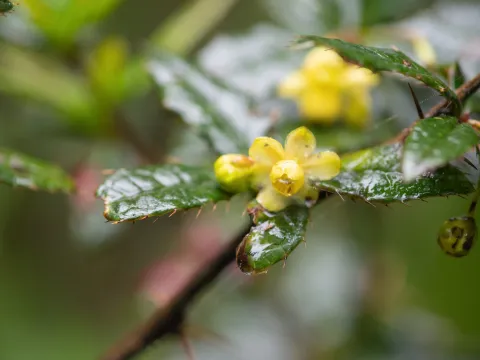
Hooker's barberry
Berberis hookeri
Hooker's barberry (Berberis hookeri) is an evergreen shrub belonging to the Berberidaceae family. Native to the Himalayan region, this plant is highly valued in gardening for its persistent, leathery, dark-green foliage and its ability to provide structural interest throughout all seasons of the year.
What the section contains
Hooker's barberry
The plant thrives in moist, well-drained soils with a preference for slightly acidic to neutral pH levels. It is essential to ensure that the site has good drainage, as waterlogged conditions can lead to root decay, which is the most common cause of failure in cultivating this specific species.
Regarding climatic requirements, Hooker's barberry prefers cool, temperate conditions. While it is hardy, it benefits from a sheltered location that provides protection against desiccating winter winds and harsh, direct afternoon sun, which can scorch the leaves, especially in early spring when the soil is still frozen.
A typical maintenance routine includes annual mulching to conserve soil moisture and suppress weed growth around the base of the shrub. Pruning should be carried out after the flowering period or in early spring to remove dead or straggly branches, ensuring the plant maintains a dense and tidy appearance.
In terms of agricultural and landscaping use, this species is ideal for woodland gardens, evergreen hedges, or as a focal point in shaded borders. Its thorns also make it an effective barrier plant when planted in rows, contributing to both aesthetics and functionality in garden design.
The primary health threats for this shrub include fungal infections such as powdery mildew and rust, especially during periods of high humidity and poor air circulation. Regular monitoring and the application of suitable fungicides are recommended to keep the foliage clean and healthy.
Common pests that may affect this plant include aphids, which tend to congregate on tender new growth, and spider mites during hot, dry spells. Integrated pest management, including physical removal or the use of appropriate insecticidal soaps, is usually sufficient to manage these infestations effectively.