

Reference · Crops
Barberry
Berberis L.
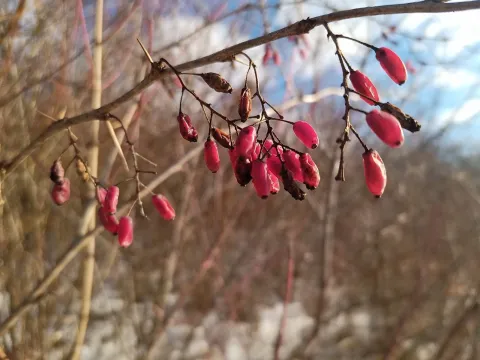
Barberry (Berberis L.) is a diverse genus of shrubs belonging to the family Berberidaceae. These plants are native to temperate and subtropical regions of the Northern Hemisphere and are widely cultivated for their ornamental value, culinary berries, and medicinal properties. The genus includes both deciduous and evergreen species.
19
items
What the section contains
 Barberry of Gagnepain
Berberis gagnepainii C. K. Schneid.
Barberry of Gagnepain
Berberis gagnepainii C. K. Schneid.
 Berberis brachypoda
 Maxim.
Berberis brachypoda
Berberis brachypoda Maxim.
 Berberis thunbergii Atropurpurea
Berberis thunbergii DC. var. atropurpurea Chenault
Berberis thunbergii Atropurpurea
Berberis thunbergii DC. var. atropurpurea Chenault
 Berberis x media Groot
.
Berberis x media Groot
Berberis x media Groot.
 Chinese barberry
Berberis chinensis Poir.
Darwin's barberry
Berberis darwinii Hook.
Chinese barberry
Berberis chinensis Poir.
Darwin's barberry
Berberis darwinii Hook.
 European barberry
Berberis vulgaris L.
European barberry
Berberis vulgaris L.
 Glaucous-fruited barberry
Berberis glaucocarpa Stapf
Glaucous-fruited barberry
Berberis glaucocarpa Stapf
 Japanese barberry
Berberis thunbergii DC.
Japanese barberry
Berberis thunbergii DC.
 Korean barberry
Berberis koreana Palib.
Korean barberry
Berberis koreana Palib.
 Magonia Bealei
Berberis bealei Fortune
Magonia Bealei
Berberis bealei Fortune
 Narrow-leaved barberry
Berberis x stenophylla Lindl.
Narrow-leaved barberry
Berberis x stenophylla Lindl.
 Nepal barberry
Berberis napaulensis (DC.) Spreng.
Nepal barberry
Berberis napaulensis (DC.) Spreng.
 Ottawa barberry
Berberis x ottawensis C. K. Schneid.
Ottawa barberry
Berberis x ottawensis C. K. Schneid.
 Rubrostilla Barberry
Berberis x rubrostilla Chitt.
Rubrostilla Barberry
Berberis x rubrostilla Chitt.
 Wallich's barberry
Berberis wallichiana DC.
Wallich's barberry
Berberis wallichiana DC.
 Warty barberry
Berberis candidula (C. K. Schneid.) C. K. Schneid.
Warty barberry
Berberis candidula (C. K. Schneid.) C. K. Schneid.
 Wilson's barberry
Berberis wilsoniae Hemsl.
Wilson's barberry
Berberis wilsoniae Hemsl.
 Wintergreen barberry
Berberis julianae C. K. Schneid.
Wintergreen barberry
Berberis julianae C. K. Schneid.
Marketplace
Products in this section · 3


Barberry
The crop thrives in sunny locations with well-drained, fertile soil. While barberry is highly adaptable and can tolerate various soil types, it performs best in loam or sandy loam with a neutral to slightly alkaline pH. Proper site selection is crucial to ensure adequate airflow, which prevents the development of fungal diseases.
Agricultural management involves regular pruning to maintain a desirable shape and prevent excessive density. Pruning also helps improve fruit yields by allowing better sunlight penetration into the center of the shrub. The plant is relatively drought-tolerant once established but benefits from supplemental irrigation during severe dry spells.
Barberry is extensively used in food production; the berries are a source of vitamin C and organic acids, commonly used in spice blends, syrups, and preserves. Furthermore, the root bark is utilized in traditional medicine due to the presence of berberine, a compound with various pharmacological applications.
Propagation is typically performed through cuttings or seed stratification. Vegetative propagation is preferred for maintaining consistent variety traits in commercial plantations, ensuring that the fruit quality and shrub characteristics remain uniform across the entire crop.
Rust disease, particularly caused by Puccinia graminis, is the most significant pathological threat to barberry. It manifests as orange pustules on the underside of leaves, which can lead to significant defoliation and weakened plant health if left untreated during the growing season.
Powdery mildew is another major fungal concern, characterized by a white, flour-like coating on leaves and stems. This disease is most prevalent in humid conditions with poor air circulation, necessitating prompt application of appropriate systemic fungicides.
Barberry aphids represent the primary insect pest, infesting young shoots and causing leaf curling and stunted growth. The damage caused by these sap-sucking insects can severely affect the overall vitality and aesthetic appeal of the bushes if not managed early.
Flower moths and various species of caterpillars can also cause substantial damage by feeding on blossoms and developing fruits, directly reducing the harvest yield. Integrated pest management strategies, including monitoring and timely interventions, are essential for successful production.
Maintaining clean cultivation practices, such as removing fallen leaves where pathogens overwinter and controlling weeds in the root zone, significantly lowers the disease pressure. These proactive measures are critical components of a successful agricultural program for this crop.