
Nepal barberry
Berberis napaulensis (DC.) Spreng.
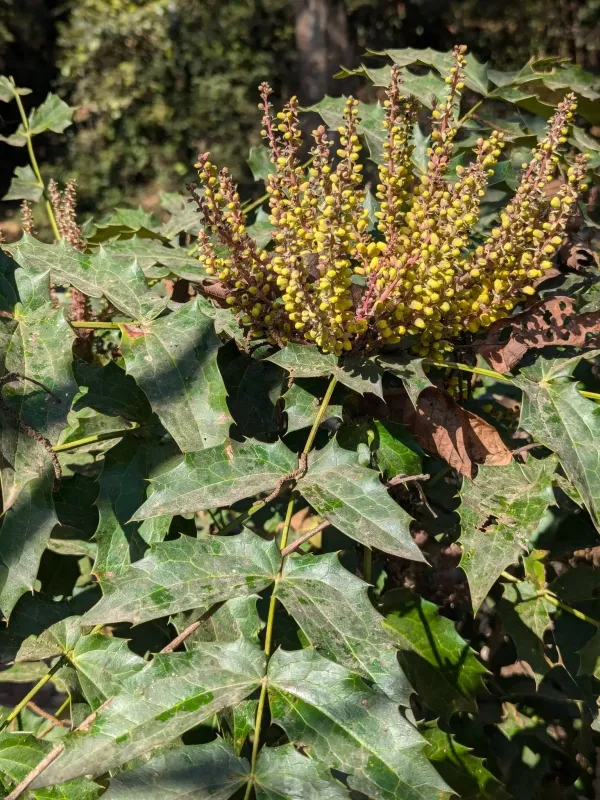
Description
Growing requirements
Nepal barberry (Berberis napaulensis), taxonomically synonymous with Mahonia napaulensis, is a striking evergreen shrub belonging to the Berberidaceae family. It is prized for its architectural form and leathery, holly-like foliage.
The plant originates from the mountainous regions of the Himalayas, including Nepal and northern India. It is naturally adapted to cool, moist environments, often thriving in high-altitude forests or sheltered slopes where the climate remains stable.
Regarding soil requirements, the species thrives in well-drained, humus-rich loam. It prefers a slightly acidic to neutral pH and requires consistent soil moisture, although it cannot tolerate waterlogging which often causes root rot.
Botanically, the plant features pinnately compound leaves and dense racemes of yellow flowers that emerge in spring. These are followed by edible, dark-colored berries that add further ornamental value to the shrub during the autumn season.
In landscaping, it serves as a robust specimen plant or a dense hedge, while in its native regions, it is historically utilized in traditional medicine due to its high alkaloid content, particularly berberine, known for its therapeutic properties.
Main diseases and pests
The primary threats to Berberis napaulensis include fungal pathogens such as rust and powdery mildew. These diseases are usually triggered by poor air circulation and excessive humidity, which necessitates strategic pruning.
Common insect pests include scale insects and aphids, which feed on the sap of young shoots. Early identification is crucial, and horticultural oils or systemic insecticides are often employed to manage infestations effectively.
Root rot is a critical physiological threat if the plant is grown in compacted, poorly draining soil. To mitigate this, adding coarse organic matter to the planting hole is recommended during the establishment phase.
Frost damage can occur in colder climates, where the foliage may be scorched by drying winds. Providing a protective mulch layer around the root zone helps to maintain soil temperature and moisture during winter months.
To maintain plant health, it is essential to monitor the foliage regularly. Providing adequate spacing and ensuring the plant receives filtered light helps to create an environment where the shrub remains vigorous and resistant to pests.