
Darwin's barberry
Berberis darwinii Hook.
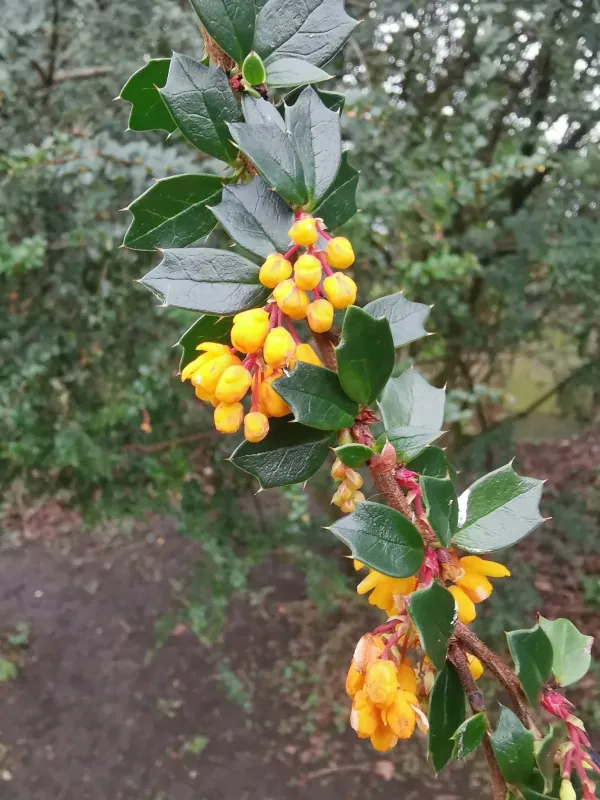
Description
Sowing dates
Propagation of Darwin's barberry is most commonly achieved through seed sowing or stem cuttings. Sowing seeds is best performed in the autumn immediately after harvest, as the seeds require a period of natural stratification in the soil to germinate successfully.
When sowing, seeds should be placed at a depth of no more than 1–2 centimeters in a well-prepared substrate. If planting in the spring, seeds must undergo artificial stratification at low temperatures for approximately three months before sowing.
Stem cuttings are often preferred as they ensure the propagation of plants that are identical to the parent, maintaining specific varietal characteristics. Semi-hardwood cuttings are usually collected in mid-summer, typically in July, when the growth has hardened slightly.
Rooting of cuttings is best carried out in greenhouses or cold frames with high humidity and stable temperatures. The application of root-promoting hormones significantly increases the success rate of the cuttings.
Young plants obtained from cuttings should be nurtured in a nursery bed for 1–2 years before being transplanted to their permanent location in a garden or landscape design.
Growing requirements
Darwin's barberry is an evergreen shrub belonging to the Berberidaceae family, native to Chile and Argentina. This plant prefers a temperate climate and is quite sensitive to severe frosts, requiring protection in colder regions.
To thrive, the species requires well-drained, fertile loamy or sandy soils. The plant does not tolerate waterlogged conditions, which can lead to root rot and eventual death of the shrub.
Sunlight is critical for maintaining the vibrant foliage color and encouraging abundant flowering. Darwin's barberry performs best in full sun or light shade, provided it is sheltered from harsh, drying winds.
The optimal soil pH range is slightly acidic to neutral. Before planting, it is recommended to incorporate organic matter, such as compost or well-rotted manure, to improve the soil structure and nutrient content.
During dry spells, the plant needs regular irrigation. Despite its hardiness, Darwin's barberry benefits significantly from mulching around the base, which helps retain moisture and suppress the growth of competitive weeds.
Main diseases and pests
The primary concern for Darwin's barberry is fungal diseases, such as powdery mildew. This condition presents as a white powdery coating on leaves and young shoots, which diminishes the ornamental value of the shrub.
Rust is another common threat, causing orange spots to appear on the undersides of the leaves. In severe infections, the affected leaves drop prematurely, and the shoots may become deformed or wither away.
Among pests, the barberry aphid is the most significant. These small insects feed on the sap of young leaves, causing them to curl, yellow, and eventually die, which significantly stunts the overall growth of the plant.
Infestation by various types of looper caterpillars is also possible; these pests can rapidly consume large amounts of foliage. Regular monitoring and the application of appropriate insecticides are necessary for control.
Disease prevention relies on maintaining proper cultural practices, such as ensuring good air circulation within the canopy through pruning and removing fallen leaves where pathogens might overwinter.