
Narrow-leaved barberry
Berberis x stenophylla Lindl.
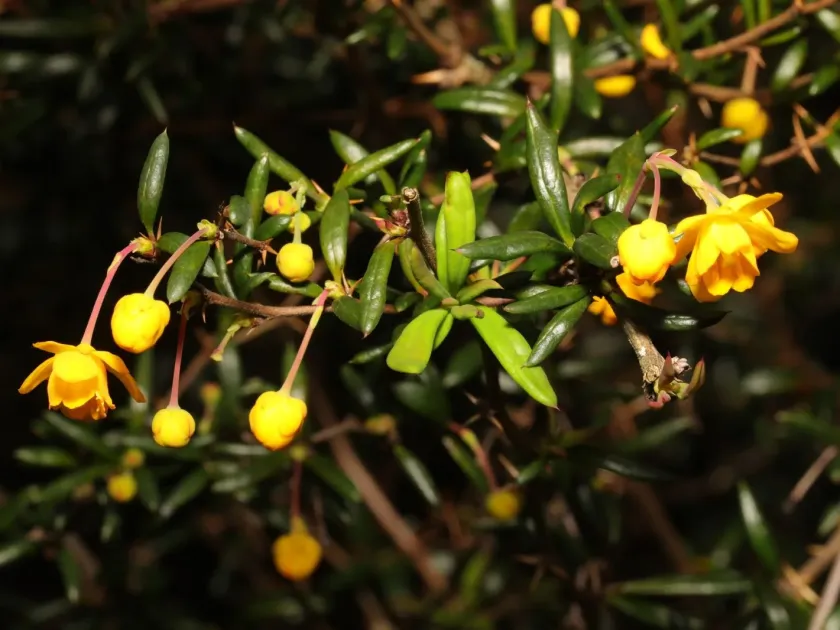
Description
Growing requirements
Narrow-leaved barberry (Berberis x stenophylla) is a sophisticated evergreen hybrid shrub from the Berberidaceae family. It is a cross between B. empetrifolia and B. darwinii, valued for its arching branches and vibrant yellow spring flowers.
The plant thrives in well-drained, fertile soils with a neutral or slightly acidic pH. It is highly sensitive to waterlogged conditions, which can lead to root rot; therefore, site selection with natural slope or drainage is crucial.
Regarding climate, it prefers temperate zones with moderate winters. While it is generally hardy, it benefits from shelter against harsh, drying winds that can damage its delicate, narrow leaves during extreme cold spells.
Sunlight requirements are significant for optimal blooming and density; full sun is ideal, although the plant will tolerate partial shade. In shaded conditions, the growth rate tends to slow down, and the shrub may appear more open.
Agrotechnical maintenance includes annual pruning to encourage fresh growth and maintain the desired shape. Applying a balanced NPK fertilizer in early spring supports the shrub's vigor, while mulch helps regulate soil moisture levels.
Main diseases and pests
Powdery mildew represents the primary fungal threat, appearing as white dust on leaves. Increasing air circulation through careful pruning of interior branches is an essential preventative measure to keep the plant healthy.
Aphids frequently target the new succulent growth during the spring season. If infestations are heavy, insecticidal soap or neem oil applications are recommended to reduce populations without harming beneficial insects.
Rust diseases can occur, particularly in regions with high spring rainfall. Managing the planting density and removing infected fallen leaves helps break the disease cycle and protects the overall shrub vitality.
Scale insects may attach themselves to the stems, causing the plant to weaken over time. Physical removal of the scale or targeted horticultural oil treatments are often necessary for effective control.
Root rot, often caused by Phytophthora, is a severe threat associated with poor drainage. Once established, this pathogen is difficult to eradicate, emphasizing the importance of site preparation and proper irrigation management.