
Wallich's barberry
Berberis wallichiana DC.
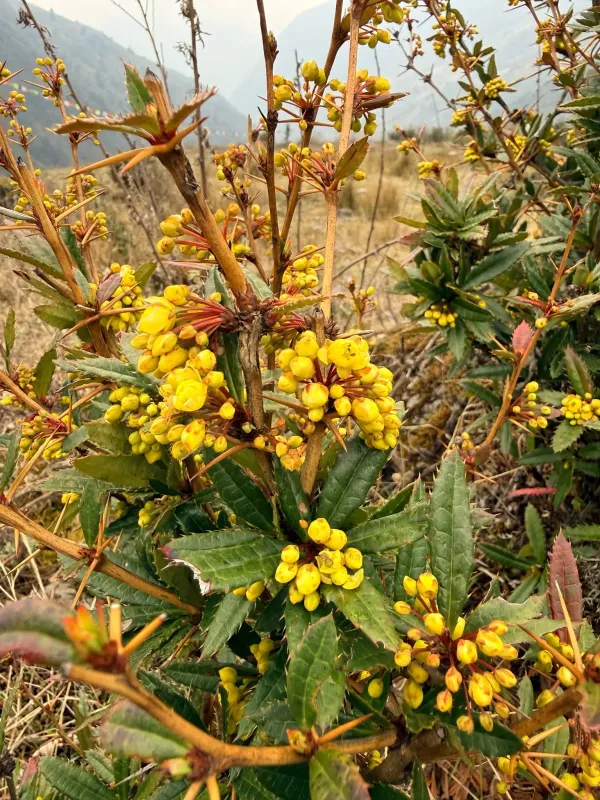
Description
Growing requirements
Wallich's barberry (Berberis wallichiana) is an evergreen shrub species belonging to the Berberidaceae family. Native to the Himalayan region and Western China, it typically grows in moist forest environments and sheltered mountain valleys.
The plant is highly demanding regarding air and soil moisture levels. For successful cultivation, it requires fertile, well-drained soil with a neutral or slightly acidic pH, rich in organic matter to support vigorous evergreen growth.
Unlike many deciduous species in the genus, Wallich's barberry is sensitive to extreme cold. In temperate climates, it needs proper winter protection as young stems are prone to dieback when temperatures drop below -15 degrees Celsius.
It performs best in partial shade or areas with filtered light. Direct midday sun during the summer can cause leaf scorch on its glossy foliage, while excessive shade may lead to a sparser, less aesthetic growth habit.
General care involves consistent watering during dry spells, spring pruning to remove dead wood, and the application of balanced fertilizers. Mulching the root zone is crucial to maintain moisture and insulate roots against thermal stress.
Main diseases and pests
The primary sanitary threats to Wallich's barberry include fungal diseases such as powdery mildew and leaf rust. These conditions often develop when the shrub is planted in areas with poor airflow or excessive humidity levels.
Insect pests, including aphids and the barberry sawfly, represent the main biotic stressors for the plant. These insects feed on the sap and leaves, potentially causing structural weakness and a reduction in the plant's overall decorative value.
Management strategies involve the targeted use of systemic fungicides and insecticides. Early detection is key to preventing large-scale infestations and minimizing the damage to the leathery leaves of the plant.
Maintaining proper structural health through selective pruning is vital for disease control. By thinning the crown, gardeners ensure better air circulation, which significantly decreases the susceptibility of the shrub to pathogenic fungi.
Sanitation practices, such as clearing leaf litter from the base of the plant during late autumn, are highly effective. Removing organic debris eliminates overwintering sites for spores and larvae, promoting plant health in the following spring.