
European barberry
Berberis vulgaris L.
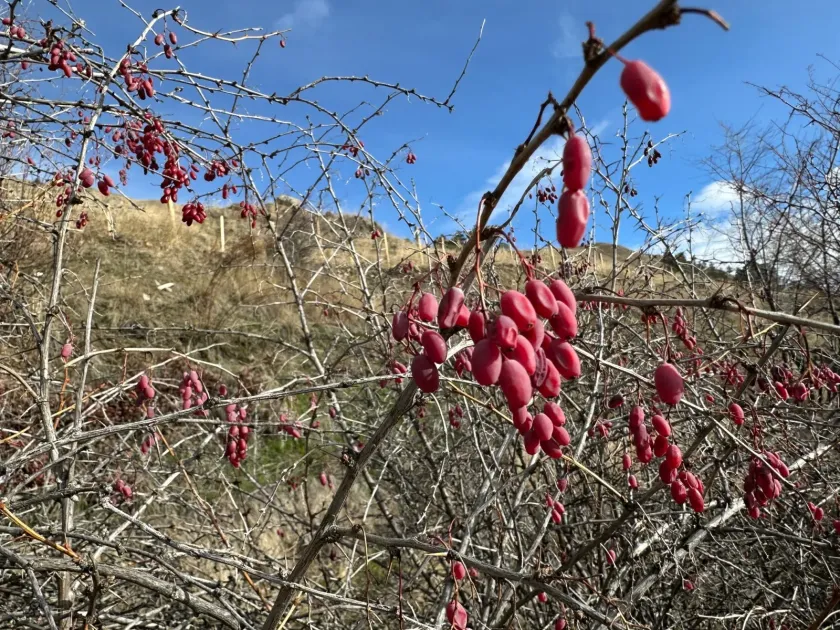
Description
Sowing dates
Seeds of Berberis vulgaris are typically sown in autumn, immediately after harvest, directly into open ground. This natural stratification process is essential for breaking dormancy and ensuring high germination rates during the spring.
If autumn sowing is missed, seeds must undergo artificial stratification at temperatures between 0 and +5 degrees Celsius for 3–4 months. Spring sowing is performed in April once the soil has warmed sufficiently.
Seeds should be planted at a depth of no more than 1–2 centimeters to allow sprouts to reach the surface efficiently. Covering the soil with a thin layer of peat or compost helps maintain moisture and prevents crust formation.
For vegetative propagation via cuttings, the process is scheduled for early summer. Green cuttings are taken in June and placed in greenhouses with high humidity to facilitate root development.
It is important to note that the European barberry is a cross-pollinating species. To achieve stable and abundant yields, it is recommended to plant multiple varieties or individual shrubs in proximity to ensure effective fertilization.
Growing requirements
The European barberry, belonging to the Berberidaceae family (Berberis vulgaris L.), is known for its ecological plasticity. It is a light-loving crop that thrives in open, sun-exposed areas without stagnation of cold air.
The plant is not overly demanding regarding soil type, although it performs best in sandy loam or loam soils with neutral acidity. Planting the shrub in areas with high groundwater levels or poor drainage should be strictly avoided.
This species exhibits excellent drought tolerance, making it suitable for regions with hot, dry summers. It is also highly winter-hardy, allowing it to be cultivated across a wide range of climatic zones.
Regular maintenance includes loosening the soil around the base to ensure oxygen reaches the root system. Annual spring pruning is recommended to remove dry, damaged, or overlapping branches to promote airflow.
Fertilization should be applied in moderation; nitrogen-rich fertilizers are suitable during the early growth stages, while phosphorus-potassium blends are preferred once the plant begins fruiting to improve sugar content.
Yield
European barberry typically begins its fruiting phase 3–4 years after being established in its permanent location. Yields increase significantly with maturity, peaking when the shrub reaches 7–10 years of age.
The average productivity of a mature bush ranges from 5 to 10 kilograms of berries per season. This metric is heavily dependent on management practices, light exposure, and pollination conditions during the flowering period.
Berries ripen unevenly, so harvesting is often conducted in several stages as they reach their characteristic bright red color. Overripening should be avoided, as it leads to softening and loss of commercial quality.
The fruits are widely used in the food industry for jams, jellies, marmalades, and juices. Due to high levels of vitamin C, organic acids, and pectins, they are also highly valued in traditional medicine.
The economic value of barberry also extends to its use as a decorative living fence. The dense structure of the shrub and the presence of sharp thorns make it an ideal biological barrier for property protection.
Main diseases and pests
One of the most serious diseases affecting this crop is powdery mildew, characterized by a white coating on leaves and young shoots. Proper spacing is essential for prevention to ensure adequate ventilation.
Barberry rust poses a significant threat not only to the shrub itself but also to neighboring cereal crops. As the barberry acts as an intermediate host for the fungus, it should not be planted near grain fields.
Regarding pests, the barberry aphid and barberry sawfly are the most damaging. These insects feed on leaf sap, causing curling, deformation, and premature leaf drop, which significantly hinders the plant's growth rate.
Systemic insecticides are effective when applied during the budding phase and immediately after the flowering period concludes. Preventative treatments using biological agents are also recommended at early stages.
Consistent monitoring of the underside of leaves and branch tips is critical. Timely removal and destruction of infected parts helps contain the spread of disease across the entire plantation.
Harvesting
The harvesting season for European barberry generally falls in September or October. Readiness is determined by the skin changing to a deep, glossy red color.
Harvesting should be carried out in dry weather to prevent spoilage during storage. The use of protective gloves is mandatory due to the sharp, long thorns found on the branches.
Harvested fruit is best stored in a cool room in well-ventilated containers. For long-term storage, berries are often dried or frozen, which helps retain most of their vitamins and essential nutrients.
While mechanical harvesting using specialized vibration equipment is possible on large-scale plantations, manual picking is preferred in private households to minimize physical damage to the delicate fruit.
After the harvest, a deep watering and the application of phosphorus-potassium fertilizers are recommended to prepare the shrub for winter. This strengthens the root system and promotes the successful overwintering of shoots.