
Wilson's barberry
Berberis wilsoniae Hemsl.
Description
Growing requirements
Wilson's barberry (Berberis wilsoniae) is a deciduous or semi-evergreen shrub that belongs to the Berberidaceae family. Originating from the mountainous regions of Western China, it is well-regarded for its compact habit and ornamental appeal.
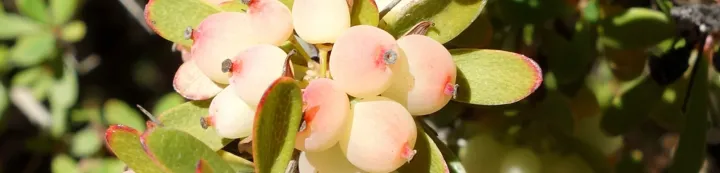
The plant features arching, spiny branches and small, rounded leaves that turn brilliant shades of red and orange during the autumn season. It also produces clusters of small, coral-red berries that persist well into the late autumn months.
This shrub thrives in full sun, though it can tolerate partial shade. For optimal growth and vibrant leaf coloration, it is essential to provide at least six hours of direct sunlight each day throughout the growing season.
Wilson's barberry requires well-drained soil. It is intolerant of heavy, waterlogged conditions, which can lead to root rot. If planting in clay-heavy environments, incorporating organic matter and grit is highly recommended to improve soil drainage.
Maintenance is relatively low once the plant is established. It shows a good degree of drought tolerance, making it an excellent candidate for low-maintenance garden designs, rockeries, or as an accent shrub in small landscapes.
Main diseases and pests
The most common pests affecting Wilson's barberry are aphids, which tend to congregate on young, tender growth. Infestations can be managed by applying insecticidal soaps or horticultural oils during the early stages of the attack.
Powdery mildew represents a significant fungal threat, especially in humid climates with poor air circulation. To minimize this risk, ensure proper spacing between plants and avoid overhead watering that keeps the foliage consistently wet.
Rust diseases may appear as yellow or orange spots on the undersides of leaves. Consistent monitoring and the removal of infected foliage are the first steps in disease management, followed by the application of appropriate fungicides if necessary.
Regular pruning is not just a stylistic choice but a vital health practice. Removing overcrowded or crossing branches improves airflow throughout the shrub, significantly reducing the likelihood of fungal colonization in the center of the plant.
In winter, avoid heavy mulching against the base of the stems, as this can encourage rot. Instead, keep the area around the root collar clear to ensure the plant enters the dormant season with healthy, dry stems.