
Magonia Bealei
Berberis bealei Fortune
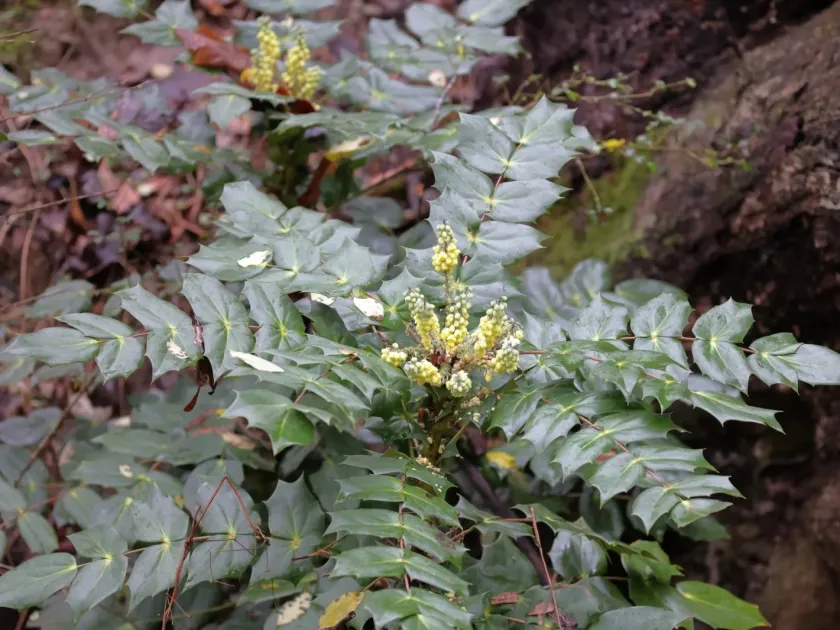
Description
Growing requirements
Magonia Bealei, botanically known as Berberis bealei, is a striking evergreen shrub belonging to the Berberidaceae family. It is prized for its architectural form, large leathery foliage, and fragrant yellow flowers.
The plant originates from the mountainous regions of Central China. It has adapted to thrive in cool, shady forest environments, making it an excellent choice for woodland garden settings.
Success in cultivation requires well-drained, humus-rich soil. While it can adapt to various soil types, maintaining a slightly acidic pH level and consistent moisture is crucial for optimal development.
Ideally, the site should provide partial shade or dappled sunlight. Protection from strong, drying winds is essential to prevent winter damage to the large, evergreen leaves that define the plant's character.
Economically and aesthetically, this shrub is utilized for ornamental planting and as an edible source of berries. The fruit is rich in vitamins and can be processed into jellies or herbal remedies.
Main diseases and pests
Fungal infections such as powdery mildew represent the most common threat to Magonia Bealei. These diseases flourish in stagnant air and environments with excessive humidity during the growing season.
Rust diseases may also affect the foliage, resulting in spots that reduce the plant's vigor. Regular inspection of the leaves is necessary to catch and treat outbreaks early.
Aphids and leaf-rolling insects are the primary pests that damage new growth. Infestations can lead to distorted leaves and decreased overall health if left unmanaged.
Cultural control methods include proper spacing to improve airflow, which significantly reduces the risk of fungal proliferation. Pruning should be done to remove dead or diseased stems.
If chemical intervention becomes necessary, systemic insecticides and fungicides should be applied according to the specific pest pressure identified by the grower.