
Barberry of Gagnepain
Berberis gagnepainii C. K. Schneid.
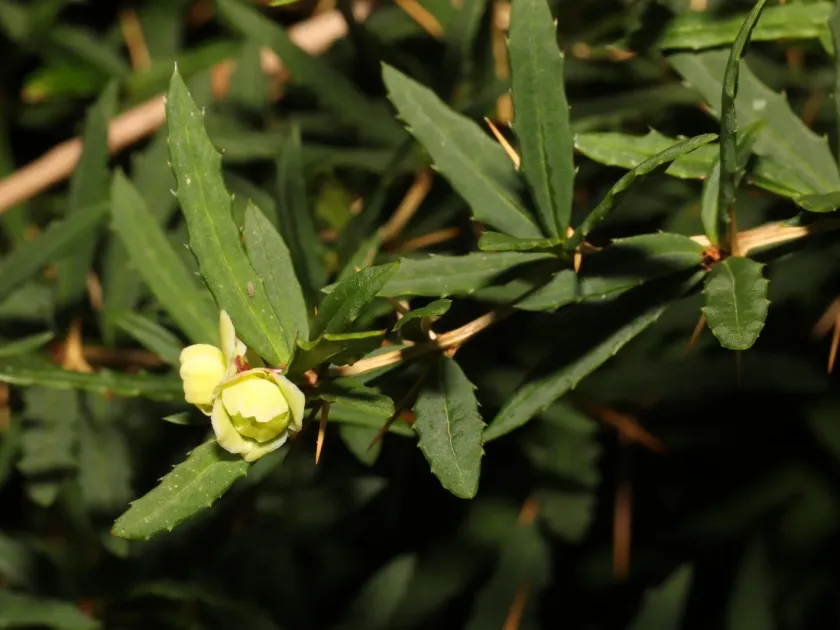
Description
Growing requirements
Berberis gagnepainii, known as the Barberry of Gagnepain, is an evergreen shrub species belonging to the Berberidaceae family. Native to western China, it is highly valued in horticulture for its distinct evergreen foliage and structural aesthetic.
Botanically, this shrub is characterized by its narrow, lanceolate, leathery leaves and long, sharp spines along the stems. It maintains a compact and upright growth habit, typically reaching heights of up to two meters in favorable conditions.
The plant requires well-drained, fertile soil that maintains consistent moisture without becoming waterlogged. It thrives best in neutral to slightly acidic soil conditions and does not tolerate stagnant water, which can damage its root system.
Regarding climate, it prefers sheltered spots with partial shade to full sun. While it is moderately hardy, it benefits from protection against cold, drying winds during winter months to prevent dehydration of the evergreen leaves.
Its primary agricultural and horticultural use is as an ornamental plant. It is frequently employed in hedge formation, screen planting, or as a focal point in woodland garden designs due to its architectural form and year-round green appearance.
Main diseases and pests
Common diseases affecting Berberis gagnepainii include powdery mildew and rust. These fungal pathogens are more prevalent in environments with poor air circulation or excessive humidity trapped within the dense structure of the shrub.
Pest threats include aphids and leaf-eating moths, which can negatively affect both the health and aesthetic quality of the shrub. Aphids, in particular, may cause curling of the young leaves if left untreated during the spring.
Management of these threats involves regular pruning to improve airflow, which significantly reduces the risk of fungal infections. Sanitary pruning involves the removal of dead or crossing branches to maintain plant vigor.
Chemical control may be necessary in severe infestations, using systemic insecticides for aphids and approved fungicides for rust management. It is important to alternate treatments to prevent the development of pathogen resistance.
Maintaining a healthy, well-nourished plant through balanced fertilization and appropriate irrigation is the primary line of defense against most biological threats in the garden environment.