
Xanthorrhoea arborea
Xanthorrhoea arborea
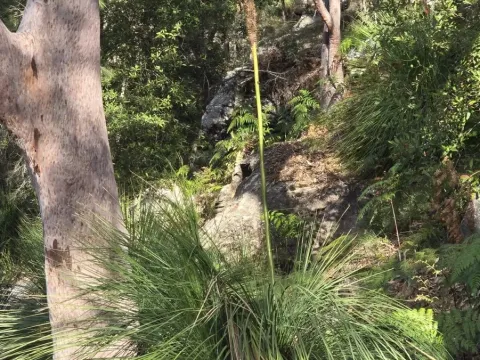
Xanthorrhoea arborea is a prominent member of the Xanthorrhoeaceae family, native to the Australian continent. Known as a grass tree, this species is characterized by a thick, woody stem and a dense canopy of long, grass-like foliage that creates a unique silhouette.
What the section contains
Xanthorrhoea arborea
The cultivation of this species requires a climate that mimics its native habitat, specifically characterized by high light intensity and long periods of sun. It is strictly adapted to environments where temperature fluctuations are not extreme.
Soil conditions are a critical factor for success; the plant demands well-drained, nutrient-poor soil. Any water stagnation in the root zone leads to rapid fungal decay, necessitating a substrate that allows for efficient oxygen exchange.
Agronomic management focuses on preventing over-fertilization. Xanthorrhoea species have evolved to thrive in low-nutrient environments, and excessive nutrient intake can negatively impact their slow development and natural hardiness.
Biological resilience is a defining trait of this crop. The structure of the stem, formed by accumulated leaf bases and resin, serves as a protective barrier against natural wildfires, an essential evolutionary adaptation for survival.
Historically, the primary harvest from Xanthorrhoea arborea was its resin, which was extracted from the trunk for use as a natural adhesive or lacquer. This practice was essential for traditional crafts and early industrial chemical applications.
Current harvest practices are largely focused on seed collection for propagation purposes. Because the germination rate is notoriously low, seeds are often treated with heat to mimic the conditions of a forest fire, which stimulates growth.
In ornamental horticulture, the harvest involves the careful extraction and relocation of established specimens. This procedure requires professional equipment to maintain the integrity of the root system, which is crucial for the plant's long-term health.
Commercial exploitation of wild populations is highly restricted by law to prevent depletion. Sustainable harvesting models currently emphasize plantation-based growth within controlled nursery environments to meet market demand.
The final product in a commercial sense is the high-value ornamental specimen rather than raw commodity materials. Providing the right soil microbiome during the growth cycle remains the most complex aspect of managing this unique botanical crop.