
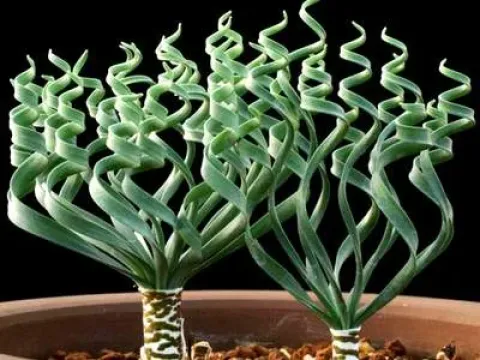
Trachyandra
Trachyandra
Sowing Trachyandra seeds is best performed in early spring to coincide with increasing daylight hours, which provides the necessary energy for vigorous early growth. Seeds should be treated with care, as their protective outer coat may require stratification to break dormancy.
What the section contains


Trachyandra
The ideal growing medium is a coarse, sandy, and well-draining substrate that mimics the plant's native South African habitat. Seeds should be sown on the surface and lightly covered with a thin layer of grit to provide stability and humidity without suffocating the embryo.
Consistent temperatures around 20–22 degrees Celsius are essential for reliable germination. Fluctuations in heat can lead to inconsistent sprouting, so a stable environment is highly recommended for the initial development phase of the seedlings.
Transplanting seedlings into individual containers should be done once they develop their first set of true leaves. During this transition, handling the roots with extreme gentleness is critical to avoid transplant shock and subsequent root rot.
Trachyandra belongs to the Asphodelaceae family and is recognized for its unique, often curly foliage. As a genus, it is adapted to survive in arid environments, requiring specific cultivation techniques to thrive in non-native climates.
Trachyandra thrives in full, bright sunlight, which is necessary to maintain the plant's structural integrity and its distinct leaf shape. Insufficient light exposure often results in etiolation, where the plant stretches and loses its characteristic appearance.
Soil quality is paramount, requiring a porous mix that encourages rapid drainage. A combination of specialized succulent potting soil supplemented with pumice, perlite, or lava rock is the gold standard for maintaining healthy root respiration.
The watering regime must be strictly controlled, allowing the soil to dry out completely before providing more water. Inactive periods require a significant reduction in watering frequency to prevent the development of root decay during dormancy.
Temperature management should follow seasonal cycles, with warmer conditions during the growth phase and cooler temperatures during the rest period. Avoid placing the plants in areas with cold drafts, as sudden thermal changes can cause significant stress.
Good ventilation is equally important, as it helps regulate moisture levels around the foliage and prevents the accumulation of stagnant air, which can encourage fungal growth.
Root rot, primarily caused by waterlogged soil and poor drainage, remains the most significant threat to the health of Trachyandra. Once rot takes hold, the plant often exhibits yellowing or softening of the base, signaling a systemic issue.
Mealybugs are common pests that infest the hidden parts of the plant, such as the leaf bases, where they feed on sap. Early detection through regular inspections is key to controlling these pests before they spread throughout the collection.
Spider mites can also become an issue during hot and dry conditions, creating fine webbing and causing stippling on the leaves. Increasing airflow around the plant can help deter these pests from establishing a colony.
Treatment should utilize appropriate horticultural oils or systemic insecticides specifically safe for succulents. It is essential to follow label instructions strictly to avoid damaging the delicate tissues of the plant during chemical applications.
Proactive prevention involves maintaining a hygienic environment, including the prompt removal of dead leaves or organic debris that could attract pests or provide a substrate for harmful fungi and bacteria.