
Xanthorrhoea resinosa
Xanthorrhoea resinosa
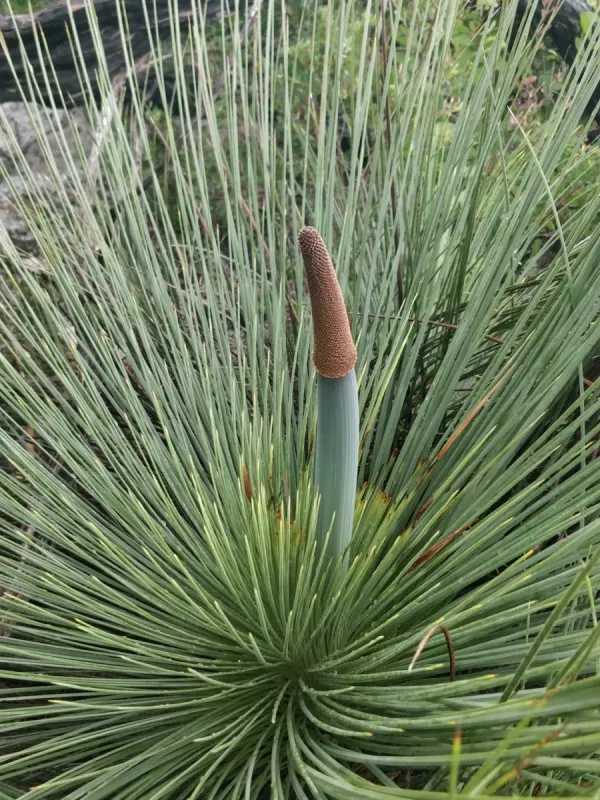
Description
Sowing dates
Propagation of Xanthorrhoea resinosa is primarily achieved through seeds, which often require special treatment to germinate. In their natural habitat, seeds are triggered by the heat and chemical smoke from wildfires, necessitating smoke-water treatment for successful cultivation.
Seeds should be sown in a free-draining, sandy-peat substrate. Maintaining a consistent temperature between 20°C and 25°C is critical to ensure proper germination, as cold or overly humid conditions often lead to seed rot.
The plant exhibits an exceptionally slow growth rate during the seedling stage. Growers must provide careful monitoring to ensure that the young plants are not overwhelmed by weeds, which can outcompete them for resources in the early years.
Root systems in young Xanthorrhoea are notoriously fragile. It is recommended to sow seeds in individual pots to avoid the need for transplanting, which causes significant stress and can lead to plant mortality.
Springtime sowing is the standard practice, as it aligns with the period of increasing day length. This promotes initial root development, providing the plant with the essential foundation required to survive its first winter cycle.
Growing requirements
The most critical requirement for Xanthorrhoea resinosa is excellent soil drainage. The species is highly susceptible to root rot if grown in heavy, waterlogged soils, making elevation or sandy substrates mandatory for healthy cultivation.
The plant is a strict heliophile, requiring full sun to thrive. Exposure to direct sunlight is essential for the plant to maintain its structural integrity and to promote the production of its characteristic resin within the trunk area.
Nutrient requirements are low, as the plant is evolved to succeed in nutrient-deficient soils. Excessive fertilization is counterproductive, as it can encourage weak, succulent leaf growth that is prone to physical damage and pests.
Climate adaptability is limited to Mediterranean or subtropical environments. While the plant can tolerate significant periods of drought, it possesses limited cold tolerance, requiring greenhouse protection in regions prone to frost.
Cultivation practices involve minimal disturbance to the soil surface. The plant relies on a specialized root structure that is sensitive to compaction and mechanical damage, making traditional tillage methods inappropriate.
Main diseases and pests
The most significant threat to the health of Xanthorrhoea resinosa is Phytophthora cinnamomi, a water mold that causes severe root rot. This pathogen thrives in moist conditions, highlighting the importance of drainage management.
Pests are generally a secondary concern for established plants. However, scale insects may sometimes infest the dense foliage, requiring manual removal or targeted biological control rather than aggressive chemical treatment.
Competition from aggressive invasive weeds remains the greatest challenge for young, slow-growing specimens. Regular weeding or the use of mulching techniques that do not trap moisture against the stem is vital for survival.
Fungal leaf spot diseases can occur if the canopy remains damp for extended periods. Promoting airflow through proper spacing during planting is the primary cultural control method against foliage-based pathogens.
The plant's slow metabolism means that recovery from disease or physical injury is prolonged. Prevention is the only viable management strategy, as treatments that work for fast-growing crops are often too invasive for this slow-growing species.
Harvesting
The primary agricultural interest in Xanthorrhoea resinosa lies in the harvesting of its valuable grass-tree resin. This resin accumulates at the base of the leaves and on the trunk, and it is traditionally gathered by scraping the hardened deposits.
Harvesting must be performed with caution to avoid damaging the central apical meristem. Since the plant grows so slowly, resin collection cycles must be long to allow for the natural regeneration of the bark and resin layers.
In ornamental landscaping, the harvest of dead foliage is a regular maintenance task. Pruning must be done cleanly at the base of the stem to maintain the aesthetic appearance of the plant's unique, long-lived woody trunk.
Seed collection is the final stage of the annual or biennial cycle. After the tall, spike-like inflorescence has withered, the capsules are gathered and dried until they dehisce, releasing the seeds for future planting.
Industrial processing of the harvested resin involves filtration and purification, as the raw material often contains debris such as leaf fibers and sand. The processed resin is valued for its specific chemical properties in various commercial applications.