
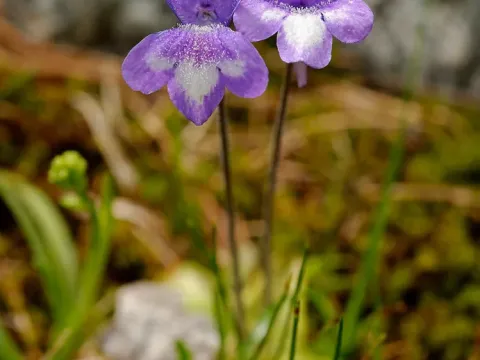
Arvet's Butterwort
Pinguicula arvetii
Arvet's Butterwort (Pinguicula arvetii) is a carnivorous perennial herb that belongs to the Lentibulariaceae family. It is a rare species native to specific limestone regions in the French Alps, where it typically thrives in specialized moist rocky habitats.
What the section contains
Arvet's Butterwort
The botanical structure is characterized by a basal rosette of leaves that act as sticky traps for small insects. This specialized evolution allows the plant to supplement its nutritional intake by absorbing nitrogen directly from captured prey, making it highly efficient in nutrient-poor environments.
Cultivation of this species requires mimicking its natural montane habitat. It prefers cool, well-ventilated areas with bright but indirect light. Excessive heat or prolonged exposure to direct sunlight can severely damage the delicate foliage and inhibit growth.
The growth medium must be well-drained and nutrient-poor, typically consisting of a mix of horticultural peat, perlite, and limestone grit to maintain a neutral or slightly alkaline pH. This composition ensures that the plant does not suffer from root rot while receiving enough calcium.
In practice, Pinguicula arvetii is cultivated primarily by enthusiasts and botanical institutions. Its utility lies in its educational value and its role as a biological specimen for understanding plant adaptations to extreme environments and nutrient scarcity.
The primary threat to the stability of Pinguicula arvetii in cultivation is the development of fungal rot. This is often caused by stagnant air and waterlogged soil, which leads to pathogens like Botrytis spreading rapidly through the base of the rosette.
Pests such as aphids and mealybugs present a significant challenge to healthy growth. These insects target the sticky leaves to extract sap, which ruins the capture mechanism and weakens the overall vigor of the plant, often leading to secondary infections.
The use of tap water is a common mistake that causes fatal mineral accumulation in the soil substrate. Because these plants have evolved in limestone regions with specific water chemistry, utilizing only distilled or rainwater is essential for long-term health.
High temperatures during the summer months can trigger heat stress, leading to burnt leaf tips and reduced enzyme production. Maintaining an ambient temperature range of 15°C to 22°C is critical to support the metabolic cycle of the species.
Effective management includes regular cleaning of dead foliage and maintaining optimal air circulation. Should an infestation occur, it is recommended to use gentle manual removal or specific low-toxicity treatments, as the plant's leaf surface is highly sensitive to chemicals.