
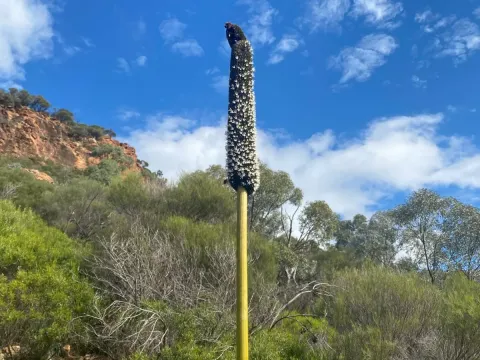
Xanthorrhoea quadrangulata
Xanthorrhoea quadrangulata
Propagation of Xanthorrhoea quadrangulata is primarily done through seeds, as adult plants are extremely sensitive to root system disturbance. Seeds should be sown in a well-draining substrate immediately after collection or in early spring under stable temperatures.
What the section contains
Xanthorrhoea quadrangulata
Germination is often slow, and cold stratification is sometimes used to improve results. The soil mix must be nutrient-poor, mimicking the natural Australian environment to prevent fungal infections in seedlings.
Transplanting seedlings is discouraged; therefore, it is best to sow them in individual deep containers. Extreme care is required during handling to avoid damaging the taproot, which is essential for the plant's long-term survival.
Plants are moved to their permanent location only after developing a robust root system, which can take up to two years. The ideal time for planting is the beginning of the growing season, provided there is no risk of late frosts.
Early care involves moderate watering while ensuring no water pools around the root collar. Xanthorrhoea is highly susceptible to root rot caused by waterlogging, making proper drainage the most critical factor for successful establishment.
Xanthorrhoea quadrangulata belongs to the Asphodelaceae family and originates from the arid regions of Australia. This plant thrives in sunny, open areas with full sun exposure throughout the day.
The plant is adapted to poor, sandy, or rocky soils with very low organic content. The optimal soil pH is slightly acidic to neutral, provided that effective drainage is maintained at all times.
The climatic conditions should resemble a Mediterranean or subtropical environment. While the plant can tolerate short periods of cold, sustained freezing temperatures are detrimental to its foliage and growth point.
Cultivation requires excellent root aeration. Any soil compaction or water stagnation quickly leads to the decay of the root system due to the proliferation of water-borne pathogens.
Fertilization should be kept to a minimum or avoided entirely, as excessive nitrogen and phosphorus trigger unhealthy growth and increase the plant's susceptibility to diseases.
The utility of Xanthorrhoea quadrangulata is primarily focused on ornamental horticulture and landscape design, where it is prized for its unique architectural appearance. Large-scale harvesting is not common.
Historically, the resin obtained from the base of the stem was used by Indigenous Australians as a natural adhesive for crafting tools and weaponry. This traditional practice is largely cultural today.
The flower spikes, which can grow to significant heights, are sometimes used in dried floral arrangements. These are harvested only after they have naturally dried out on the plant.
Maintenance in landscaping involves the careful removal of dead lower leaves. This process must be performed with great precision to avoid damaging the woody trunk, which grows very slowly over many years.
It is important to note that many populations of this species are protected by law; therefore, harvesting parts of wild plants is strictly regulated and requires official authorization.
The primary biological threat to Xanthorrhoea is the pathogen Phytophthora cinnamomi. This organism causes root rot, to which the plant has little to no natural resistance, often leading to sudden death.
Pests such as mealybugs and scale insects may infest the base of the leaves within the dense skirt of the plant. Regular monitoring of the lower foliage is necessary to detect infestations early.
Excessive humidity and lack of air circulation in sheltered environments promote the growth of molds and fungi. Good ventilation around the crown of the plant is vital for its health.
Improper watering regimes lead to root dieback, which triggers secondary infections. Symptoms typically appear as yellowing and subsequent withering of the leaf tips.
Once signs of decay appear, recovery is extremely rare. Therefore, the primary defense strategy is strict adherence to cultural requirements and the avoidance of contaminated planting media or tools.