
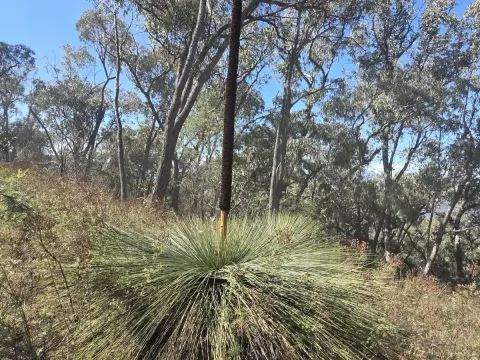
Xanthorrhoea glauca
Xanthorrhoea glauca
Propagation of Xanthorrhoea glauca is primarily achieved through seeds, which often require smoke treatment to break dormancy, mimicking the conditions of natural bushfires in their native Australian habitat.
What the section contains
Xanthorrhoea glauca
The sowing substrate must be extremely well-draining, consisting of a mix of sand, gravel, and minimal organic matter. Sterile conditions are recommended to prevent the damping-off of vulnerable seedlings during the early stages.
Seeds should be surface-sown or covered only very lightly with grit, as light is a critical trigger for germination. Constant moisture levels are necessary initially, but as seedlings emerge, the environment should become progressively drier.
Germination is notoriously slow and sporadic, often taking several weeks or even months. Growers must maintain patience and consistent temperatures to encourage successful establishment of the young plants.
Transplanting seedlings is highly stressful for the plant. It is recommended to sow seeds in deep, individual pots to minimize root disturbance, which is the leading cause of mortality in juvenile specimens.
Xanthorrhoea glauca, belonging to the Asphodelaceae family, is a slow-growing, long-lived perennial native to the dry sclerophyll forests and rocky slopes of eastern Australia.
The plant thrives in full sun, which is essential to maintain its characteristic glaucous blue-grey foliage. In low-light conditions, the leaves lose their rigidity and vibrant color, and the plant becomes prone to physiological stress.
Soil requirements are strict regarding drainage. These plants are adapted to nutrient-poor, gritty soils and do not tolerate "wet feet." A lack of aeration in the root zone quickly results in the death of the root system.
As a xerophyte, the species is exceptionally drought-tolerant. The trunk (caudex) acts as a reservoir, and the plant should only be irrigated during the first year of establishment or in extreme, prolonged drought conditions.
Temperature tolerance varies, but established plants can handle occasional light frosts. However, they should be protected from prolonged freezing temperatures and excessive winter humidity, which can lead to crown rot.
The most devastating pathogen for Xanthorrhoea glauca is Phytophthora cinnamomi, a water-borne root rot fungus. Once infected, there is typically no recovery, making prevention through soil hygiene and drainage the only effective management.
In container or nursery settings, mealybugs and spider mites can infest the dense foliage. These pests should be monitored frequently, particularly in the leaf axils where they can hide and multiply undetected.
Physical damage to the root system is a significant threat to plant health. Even minor disturbance during repotting can trigger a severe decline, as the roots are sensitive to changes in the growing medium.
Humidity and stagnant air can lead to fungal leaf spots. Maintaining high airflow around the plant is critical to keeping the foliage dry and preventing the development of opportunistic bacterial and fungal pathogens.
The crown of the plant must remain dry. Water accumulating in the base of the leaves provides an ideal environment for decay, which can eventually spread to the central growing point and kill the entire plant.