
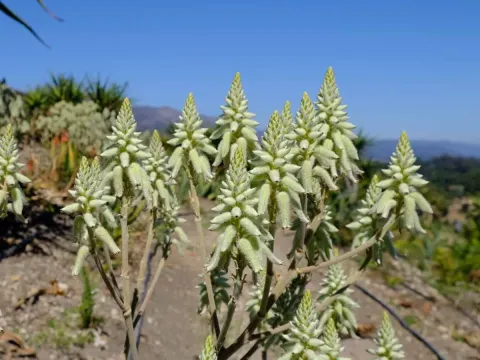
Woolly aloe
Aloe tomentosa
The Woolly aloe (Aloe tomentosa) is a distinctive succulent species from the Asphodelaceae family. This species is native to the high-altitude mountainous regions of Yemen, where it thrives in specialized microclimates on rocky terrain.
What the section contains
Woolly aloe
Botanically, it is characterized by dense rosettes of leaves covered with fine, soft hairs, which give the plant its common name. These hairs are an evolutionary adaptation that helps the plant capture atmospheric moisture and reduce direct sun damage.
To cultivate this species successfully, growers must prioritize excellent drainage. Using a substrate consisting of coarse sand, pumice, and minimal organic matter is essential to prevent root asphyxiation during the growth cycle.
Climate requirements involve high levels of solar exposure throughout the year. While it can handle intense heat, it prefers a well-ventilated environment where temperatures do not stay above 30 degrees Celsius for extended periods.
Watering frequency should be strictly regulated. During the active growth season, water sparingly, allowing the potting mix to dry out completely between applications. During winter dormancy, watering should be reduced to an absolute minimum.
The primary threat to Aloe tomentosa in a controlled environment is moisture-related fungal decay. If the roots remain saturated for too long, they will succumb to rot, often causing the entire rosette to collapse.
Pests such as mealybugs represent a significant challenge for this species due to their ability to hide within the leaf axils and beneath the plant's fine hairs. Manual removal with a soft brush or targeted systemic insecticides is recommended.
Spider mites can also become problematic in low-humidity environments. These mites feed on the plant tissues, leading to discoloration and a significant reduction in the plant's aesthetic and biological vitality.
Environmental stress caused by poor air circulation often exacerbates pest infestations and fungal growth. Ensuring constant, gentle airflow around the plant helps keep the foliage dry and prevents the build-up of humidity.
To maintain a healthy immune system, the plant requires seasonal shifts in temperature. Failure to provide a cooler winter period can disrupt the plant's natural rhythm and increase its susceptibility to physiological disorders.