
Tulista
Tulista
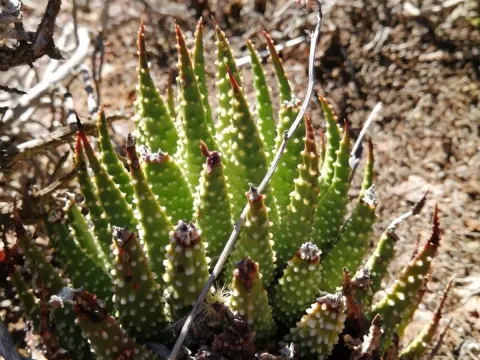
Tulista is a genus of succulent plants within the Asphodelaceae family. Originally classified under the genus Haworthia, these plants are native to the arid regions of the Cape Province in South Africa, where they grow in rocky soil.
What the section contains

Tulista
These plants are highly valued for their ornamental rosettes of thick, succulent leaves, which can exhibit diverse textures ranging from smooth to heavily tuberculate or warty surfaces. They are adapted to survive in harsh, low-rainfall environments.
Successful cultivation requires bright, filtered light. While they tolerate intense conditions, they should be protected from harsh midday summer sun to prevent tissue scorching, while ensuring enough light is provided to maintain the plant's tight rosette shape.
A well-draining mineral-based potting mix is essential. Using a standard peat-based soil without added grit can lead to root suffocation and eventual decay, which is the most common cause of failure when cultivating these succulents.
Watering should be deep but infrequent, allowing the substrate to dry out completely between sessions. During the winter dormancy phase, irrigation should be significantly reduced or suspended to mimic the natural climate of their native habitat.
The most significant threat to Tulista species is root rot caused by stagnant water in the soil. Over-watering, especially in cool or humid conditions, rapidly leads to the breakdown of root tissue and the base of the stem.
Mealybugs are the most persistent pests encountered in home cultivation. They hide within the tightly packed leaf axils, making them difficult to detect until an infestation is well-established, potentially weakening the plant.
Spider mites can also be problematic, particularly in indoor environments with low humidity. These pests feed on the cell sap of the leaves, resulting in stunted growth and discolored spots on the epidermis of the succulent.
Managing pests often requires the application of systemic insecticides or mechanical removal using cotton swabs dipped in isopropyl alcohol. Good hygiene, such as removing dead leaves from the base of the plant, reduces the habitats available for these pests.
Prevention is centered on maintaining optimal airflow around the foliage. When repotting, inspect the root ball for signs of pests or decay, ensuring that the new medium is clean and free of pathogens to promote vigorous future growth.