
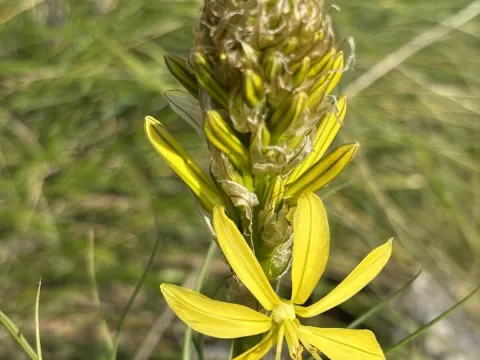
Yellow asphodel
Asphodeline lutea
Sowing seeds of yellow asphodel is recommended to be done in late autumn directly into the open ground, which ensures natural stratification for better spring germination.
What the section contains
Yellow asphodel
For spring sowing, seeds require prior cold stratification for 1–2 months at a temperature of about +5°C; otherwise, the germination rate will be extremely low and uneven.
To speed up the growing process, growers often use the seedling method, sowing seeds in containers in late winter, followed by transplanting into individual pots.
The optimal planting depth for seeds is 1–1.5 centimeters, and the surface should be lightly covered with a loose substrate to maintain consistent moisture.
Seedlings emerge unevenly, so it is essential to keep the cultivation area free from weeds that can quickly suppress the slowly developing young plants.
Yellow asphodel is a perennial herbaceous plant belonging to the Asphodelaceae family, native to the Mediterranean region and parts of Southern Europe.
The crop prefers sunny, open locations, as shaded conditions cause the flower stalks to become weak, leggy, and lose their overall decorative appearance.
The plant is highly sensitive to drainage quality and cannot tolerate waterlogging in the root zone, which can easily lead to root rot and other fungal diseases.
The soil should be light, porous, and moderately fertile, with a preference for rocky or sandy substrates that have a neutral to slightly alkaline pH level.
During the active growth season, the plant is remarkably drought-tolerant, although young plants require regular watering during their first year to establish a strong root system.
The primary threat to yellow asphodel is excessive soil moisture, which leads to root system damage and death of the entire plant due to fungal pathogens.
In cool and damp spring conditions, young foliage may suffer from powdery mildew, requiring prompt treatment with broad-spectrum fungicides.
Among common pests, snails and slugs pose the greatest threat, especially during the spring when tender young shoots are actively emerging from the soil.
Rhizomes can be damaged by soil-dwelling pests, such as wireworms, which create entry points for secondary bacterial infections within the plant tissue.
To prevent these threats, it is recommended to practice proper agricultural techniques, mulch the area with fine gravel, and use physical barriers to protect against gastropods.