
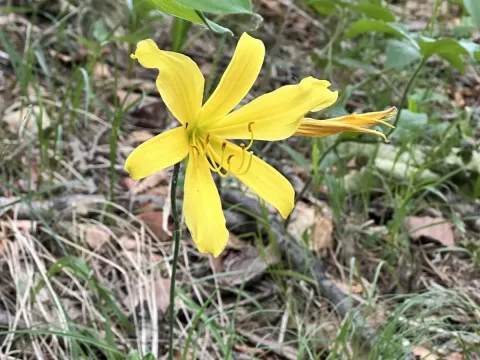
Hemerocallis minor
Hemerocallis minor
Propagation of Hemerocallis minor is typically achieved through division of the root clump, which should be performed in early spring or late autumn.
What the section contains
Hemerocallis minor
When propagating via seeds, sow them in late autumn to ensure they undergo natural stratification during the winter season for better germination rates.
If sowing in the spring, seeds must be kept in a cold environment (around +2°C to +5°C) for several weeks before being planted into the substrate.
The planting depth for seeds should be shallow, about 1-2 centimeters, covered with a fine layer of fertile soil to protect them from drying out.
Young seedlings require consistent moisture during the first year of growth until their root system becomes well-established in the permanent plot.
Hemerocallis minor, belonging to the Asphodelaceae family, is a perennial plant native to East Asia, including China, Mongolia, and Siberia.
The crop thrives in sunny locations but can tolerate partial shade, provided that the soil drainage is excellent to prevent root rot.
Ideal soil for this species is a nutrient-rich loam that is slightly acidic or neutral, enriched with organic matter such as compost or humus.
Watering needs are moderate; the plant requires more frequent hydration during the blooming period and during hot, dry summer weather.
This variety is highly resistant to cold climates, making it an excellent candidate for landscape gardening in various temperate zones.
The most common pests affecting this daylily species include lily beetles and aphids, which can cause significant damage to the foliage and buds.
Fungal pathogens such as leaf streak and crown rot may appear if the plants are placed too closely together, preventing proper air circulation.
To mitigate the risk of disease, it is essential to ensure that the soil has good drainage and that the plants receive adequate space during planting.
Chemical control involving systemic insecticides and fungicides can be effective if applied early in the season when symptoms first appear.
Regular inspection of the undersides of the leaves helps in detecting early infestations of pests before they cause irreversible harm.
Hemerocallis minor is widely used in landscape architecture due to its compact size, fragrant yellow flowers, and low maintenance requirements.
The plant has culinary significance in various Asian cultures, where the flowers and flower buds are harvested for use in soups and stir-fry dishes.
Harvesting for culinary purposes should be done before the flowers fully open to ensure the best texture and mild flavor profile of the crop.
In ornamental settings, remove spent flower stalks immediately after blooming to maintain the plant's aesthetic appeal and promote healthy vegetative growth.
The plant's roots are sometimes harvested for medicinal applications, following traditional practices that utilize specific parts for health benefits.