
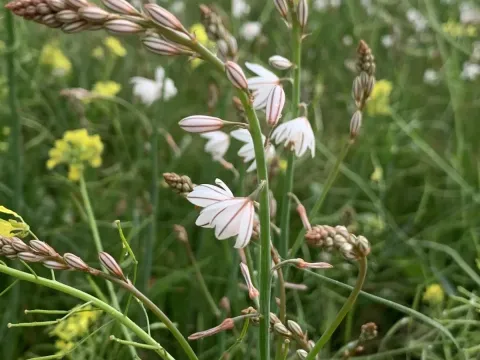
Asphodelus tenuifolius
Asphodelus tenuifolius
Asphodelus tenuifolius is typically grown from seeds. Sowing is usually synchronized with the arrival of cooler, wetter seasons in arid regions, which provides the necessary moisture for germination.
What the section contains
Asphodelus tenuifolius
Soil preparation involves light tilling to create a fine tilth, as the seeds are relatively small and require good contact with the substrate to sprout effectively.
Sowing density should be managed to ensure adequate space for each plant, as overcrowding can lead to nutrient competition and a reduction in biomass quality during the growing season.
In controlled agricultural settings, rows are often spaced to allow for inter-row weeding, ensuring the crop remains free from competition during its early growth stages.
The optimal germination temperature range is moderate; extremes in heat or cold immediately following sowing can significantly decrease the success rate of crop establishment.
This species is highly adapted to high-light environments. It thrives in full sun and will show significantly reduced growth rates if subjected to any form of shading by neighboring flora.
The plant requires well-drained, sandy or gravelly soil. It is notoriously intolerant of waterlogged conditions, which lead to rapid root decay and plant mortality in most soil types.
Asphodelus tenuifolius is notably drought-tolerant, making it an excellent candidate for cultivation in water-scarce regions where other agricultural crops would fail without heavy irrigation.
It is capable of growing in nutrient-poor soils, showing an impressive ability to extract minerals even in degraded landscapes, which is beneficial for land restoration projects.
The plant requires a period of stable weather for its vegetative phase. While it can withstand periods of dry heat, it performs best when temperatures remain within a temperate range.
The most common threats to this crop involve fungal pathogens that emerge during periods of unseasonable rainfall. These pathogens primarily affect the root system and the base of the stem.
Soil-borne insects, particularly wireworms, represent a significant threat to young plants, as they consume the developing root structures before the plant has established sufficient defenses.
Weed infestation is a major concern. Because the crop has a relatively slow growth rate in its juvenile stage, weeds can easily outcompete it for nutrients and solar radiation.
Maintaining proper drainage is the most effective cultural method to prevent the spread of diseases, as many pathogens are encouraged by stagnant water near the plant's base.
In cases of infestation, integrated pest management strategies should be prioritized over broad-spectrum chemical applications to preserve the ecological integrity of the soil.
Harvesting is typically timed for the period of maximum vegetative density, just before the plant shifts its energy entirely toward seed production, which ensures high quality.
For seed harvesting, the process is delayed until the fruit capsules turn brown and begin to dry, but it must be concluded before natural dehiscence leads to seed loss.
The harvested biomass must be handled gently to avoid crushing the delicate foliage, which can lead to rapid oxidation and degradation of valuable compounds contained within the leaves.
Drying is performed in shaded, airy structures where the temperature is kept strictly below 40 degrees Celsius to maintain the chemical integrity of the plant material.
Post-harvest processing involves screening for debris, drying, and eventual storage in airtight containers to prevent moisture re-absorption and subsequent microbial contamination.