
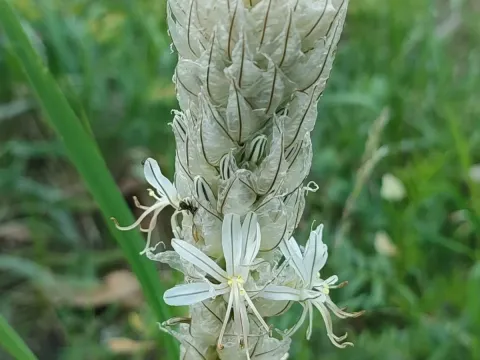
Asphodeline taurica
Asphodeline taurica
Sowing Asphodeline taurica is best performed in late autumn, allowing the seeds to undergo natural winter stratification, which significantly improves germination rates in spring.
What the section contains
Asphodeline taurica
If spring sowing is preferred, it is essential to stratify the seeds in a refrigerator for at least two months at temperatures near freezing to break seed dormancy.
The ideal substrate for sowing should be a gritty, well-draining mix, ideally consisting of equal parts peat or compost and coarse horticultural sand.
Seeds should be sown at a shallow depth of about 1 centimeter, covered lightly with sand, and kept consistently moist until emergence begins.
Successful establishment depends on ensuring the seedlings have adequate light and avoiding waterlogged conditions, which are critical in the early stages of development.
Asphodeline taurica belongs to the Xanthorrhoeaceae family and is highly adapted to arid environments, thriving in rocky or calcareous soil types.
This species demands full sun exposure to maintain its compact growth habit and produce strong, upright flower spikes during the blooming season.
The primary soil requirement is excellent drainage; the plant is extremely sensitive to winter wetness and must be planted in areas with no risk of flooding.
It is a hardy plant that tolerates low fertility soils well, meaning that intensive fertilization is typically unnecessary and can often be detrimental.
Once established, the plant shows remarkable drought resistance, making it suitable for xeriscaping or rock garden designs in Mediterranean-like climates.
The most common threat to this plant is fungal root rot, which typically occurs when the soil remains too damp, especially during the dormant winter months.
Slugs and snails can cause damage to the foliage during the early spring growth flush, necessitating occasional monitoring and manual removal.
Poor soil aeration can lead to stunted growth and increased susceptibility to various soil-borne pathogens that compromise the fleshy root system.
To mitigate these risks, it is essential to ensure that the crown of the plant is slightly elevated to prevent moisture accumulation at the base.
Proper spacing between plants is also crucial to ensure sufficient air circulation, which prevents the development of fungal leaf spots or powdery mildew.
The primary use of Asphodeline taurica is aesthetic, as it serves as a striking ornamental specimen in specialized gardens and xeriscape landscapes.
Seed harvesting should occur when the seed pods have turned brown and brittle but before they burst to release their contents into the surrounding soil.
After harvesting, the seeds should be extracted from the pods and dried thoroughly in a cool, well-ventilated area before being placed in airtight storage.
Flowers are sometimes harvested for floral arrangements, although they are best enjoyed in the garden where their unique scent can be appreciated.
Given the plant's natural history and limited distribution, any harvesting from wild populations must be strictly regulated to preserve ecological balance.