
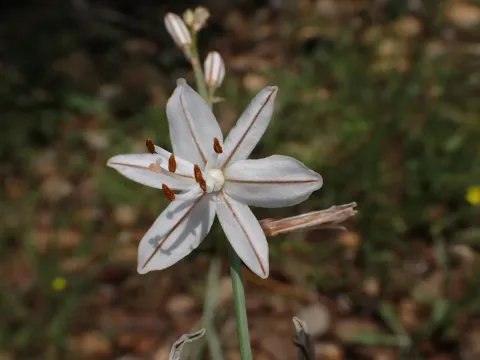
Asphodelus ayardii
Asphodelus ayardii
Asphodelus ayardii is a perennial herbaceous plant belonging to the Asphodelaceae family. Native to the Mediterranean region, it thrives in open, sunny environments with well-draining soil conditions.
What the section contains
Asphodelus ayardii
The plant features a specialized root system consisting of fleshy tuberous roots that store water and nutrients. This structural adaptation allows the species to survive the harsh, arid summers typical of its natural range.
To ensure optimal growth, the soil must be sandy or stony with a neutral to slightly alkaline pH. Poor drainage or waterlogged conditions are lethal to the plant, as they quickly trigger root rot.
The climate requirements for this species include mild winters and a long active growing season during the cooler months of the year. It is highly photophilous and requires full sun exposure to maintain its health.
Agronomic management requires careful irrigation during the active flowering phase, whereas during the summer dormancy period, all watering should be strictly avoided to prevent the rotting of the tubers.
Propagation of Asphodelus ayardii is primarily achieved through seeds or the division of tuberous roots. Sowing is best performed in the autumn to allow for natural stratification in the soil.
When propagating by seed, it is essential to keep the soil surface consistently moist during germination. Seeds should be sown at a depth of 1–2 centimeters in a loose, well-aerated substrate.
Vegetative propagation via root division should be undertaken during the biological dormancy phase. Each division must retain a portion of healthy tuberous material to ensure successful establishment.
Planting density should provide at least 30–40 centimeters between individual plants to prevent overcrowding and to ensure proper air circulation across the planting site.
Regular maintenance of row spacing is necessary during the early stages of establishment to facilitate weeding and to allow for proper plant development without competition from invasive weeds.
Fungal diseases resulting from soil moisture excess are the primary threat to this crop. Root rot pathogens can cause significant losses, especially in poorly drained plantation areas.
Soil-borne pests, including nematodes and certain beetle larvae, can cause structural damage to the root system, weakening the entire plant and making it susceptible to secondary infections.
Aphids can pose a risk during the peak of the flowering season, causing damage to the floral stalks. Integrated pest management using systemic insecticides is advised for severe infestations.
Weeds are a major concern during the early growth period. Implementing a regular mechanical weeding schedule or using appropriate mulching helps to reduce competition for nutrients and space.
Over-fertilization with nitrogenous compounds is discouraged, as it promotes excessive vegetative growth at the expense of root resilience, increasing the plant's vulnerability to various environmental stressors.