
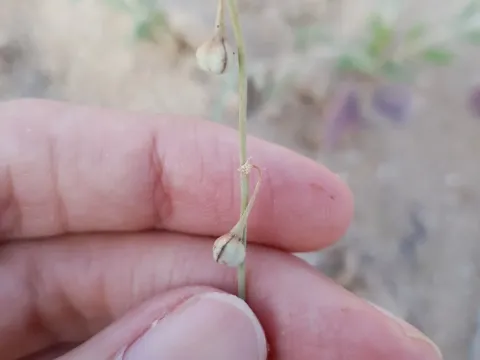
Asphodelus refractus
Asphodelus refractus
Asphodelus refractus is a distinct perennial herbaceous plant belonging to the Asphodelaceae family. It is evolutionary adapted to survive in harsh arid environments characterized by irregular rainfall and high temperatures.
What the section contains
Asphodelus refractus
The native distribution of this species spans the desert landscapes of North Africa and the Middle East, where it grows in sandy plains and rocky terrain. Its ability to survive in these regions makes it an interesting subject for xerophytic gardening.
Morphologically, the plant features a rosette of narrow, grass-like leaves emerging from a root system composed of tuberous rhizomes. These tubers serve as vital storage organs for moisture and starch during the dry season.
Environmental requirements for Asphodelus refractus are strict: it demands full sun exposure to thrive. Any form of shade or competition from faster-growing vegetation will significantly stunt its development and prevent flowering.
The substrate must be exceptionally well-draining, preferably consisting of a sandy or gritty mix with minimal organic matter. Poor drainage is the primary cause of failure in cultivating this specific species.
Fungal pathogens represent the most critical threat to Asphodelus refractus. Soil-borne fungi often attack the tuberous roots if the soil remains moist for too long, leading to irreversible decay.
Pests such as spider mites may infest the plant, particularly in greenhouse conditions where air circulation is restricted. These mites sap the plant's vitality, leading to chlorosis and stunted growth.
Small rodents can be destructive in natural habitats or open field conditions, as they actively forage for the succulent and nutrient-rich tubers buried under the sand.
Preventative measures include maintaining a dry dormancy period and ensuring maximum air flow around the leaf rosettes to mitigate potential fungal outbreaks.
Strategic soil sterilization prior to planting is highly recommended to eliminate existing soil pathogens that could jeopardize the establishment of the young root systems.