
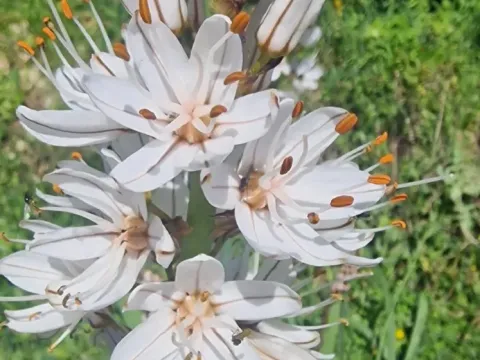
Asphodelus macrocarpus
Asphodelus macrocarpus
The propagation of Asphodelus macrocarpus is primarily achieved through seeds, which require a cold stratification process to overcome dormancy. Seeds should be sown in autumn to allow for natural cooling, or stored in a refrigerator for 1-2 months before spring sowing.
What the section contains
Asphodelus macrocarpus
For best results, prepare a seedbed with well-drained, sandy soil. Sow the seeds at a depth of about 1.5 centimeters and ensure the area is clearly marked, as germination is slow and may occur over several weeks.
Maintain consistent moisture until seedlings emerge, but avoid excessive watering that could lead to damping-off. Once the seedlings develop several true leaves, they can be thinned or carefully transplanted to their final locations.
Young plants are relatively slow to establish their root systems. It is recommended to keep the area weed-free during the first season, as competition from invasive grasses or weeds can stunt the growth of the young asphodel plants.
Self-seeding is a common occurrence in mature clumps. If you do not wish for the plant to spread throughout the garden, remove the flower heads before the seed capsules fully mature and burst open.
Asphodelus macrocarpus, a member of the Xanthorrhoeaceae family, is a robust herbaceous perennial. It thrives in locations that receive full sun for the majority of the day, which is essential for consistent and vibrant flowering.
The plant requires extremely well-draining soil. Whether the substrate is sandy, rocky, or chalky, it must prevent moisture from accumulating around the root crown, as waterlogging is the primary cause of root rot in this species.
Climatically, it is adapted to temperate and Mediterranean-like environments. It is highly drought-tolerant once established, thanks to its specialized fleshy roots that act as storage organs for water and nutrients during dry spells.
Soil fertility does not need to be high. In fact, excessive fertilization, especially with nitrogen, is detrimental as it promotes succulent leafy growth that is less hardy and more susceptible to winter frost damage.
The species is generally resistant to cold but appreciates a mulch cover during the first winter after planting. In areas with high humidity or heavy winter rain, raised garden beds are the preferred method for ensuring healthy growth.
Asphodelus macrocarpus is generally considered a low-maintenance plant with few major pest or disease issues. However, in poorly drained soil, it is highly susceptible to fungal infections of the root system, such as Phytophthora or Pythium.
Slugs and snails can sometimes cause damage to the tender young foliage of emerging plants during early spring. Standard gardening precautions, such as maintaining cleanliness around the plant base, are usually sufficient to mitigate this.
Occasionally, leaf spot diseases may appear during periods of prolonged high humidity. Providing adequate air circulation and keeping the crown of the plant clean and free of decaying debris is the best cultural control method.
Aphids might occasionally colonize the flower stalks during the flowering season. While rarely fatal, heavy infestations can weaken the stalk; if necessary, insecticidal soaps or gentle water sprays are effective interventions.
Rabbits and other small rodents generally avoid the plant due to its taste, though in very young stages, some minor herbivory might occur. Protecting the garden with simple mesh fencing is a recommended precaution for newly established plants.
Harvesting for decorative purposes involves cutting the flower spikes just as the lowest flowers in the raceme begin to open. This stage ensures the longest vase life for the cut inflorescences in floral arrangements.
For seed production, allow the flower spikes to remain on the plant until the seed pods turn brown and begin to dry out. The spikes should be harvested just before the pods split to ensure the maximum yield of viable seeds.
After the harvest of seeds, the stalk should be cut back to the base of the plant. This prevents the energy from being wasted on seed maturation and encourages the plant to focus its nutrients into the root crown for winter survival.
When collecting seeds, clean them by removing the chaff and store them in a cool, dark, and dry environment. If stored correctly in airtight containers, the seeds can retain their viability for several years.
The foliage should only be removed after it has died back naturally in the late autumn. Early removal of the leaves disrupts the plant's natural energy cycle and can lead to a decrease in flowering performance the following spring.