
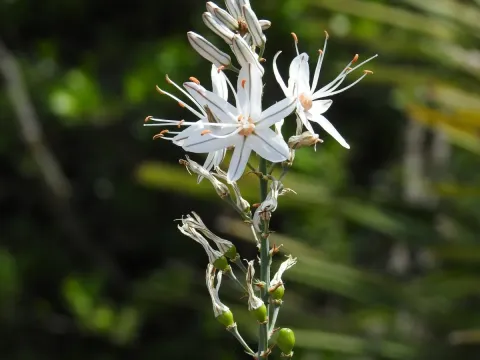
Asphodelus serotinus
Asphodelus serotinus
Asphodelus serotinus belongs to the Xanthorrhoeaceae family and is typically propagated through seeds or, in some cases, by dividing the tuberous roots during the dormant stage.
What the section contains
Asphodelus serotinus
Sowing in open ground is best executed in late autumn; the winter cold serves as a natural stratification process which significantly enhances germination rates come spring.
For container-grown seedlings, seeds should be sown in March into a light, nutrient-rich substrate, maintaining consistent soil moisture until the first sprouts emerge.
Seeds are ideally planted at a shallow depth of approximately 1–2 centimeters, ensuring they receive enough ambient light to stimulate healthy and uniform growth.
Transplanting into the garden bed should occur once the young plants have developed at least 3–4 true leaves, providing sufficient spacing to ensure long-term vigor.
This species thrives in sunny, open locations, as shade can weaken the stems and lead to significantly reduced flowering performance throughout the season.
Well-draining, loose soil is a critical requirement for this culture, as waterlogged conditions often cause the tubers to rot, leading to plant mortality.
Asphodelus serotinus is highly drought-tolerant, making it an excellent choice for xeriscaping or dry-land gardening where irrigation resources are limited.
The plant performs best in neutral to slightly alkaline soil conditions and does not require frequent fertilization, as excessive nutrients can trigger rank vegetative growth.
Winter care in colder climates involves mulching the root zone with organic materials such as dry leaves or straw to provide insulation against freezing temperatures.
The primary threat to the health of Asphodelus serotinus is fungal infection, which often stems from poor drainage or excessively humid growing conditions.
Root and crown rot are particularly destructive, appearing as dark, soft spots on the tubers; preventive measures like proper site selection are more effective than curative ones.
Slugs and snails represent a common pest threat, frequently feeding on tender new shoots in early spring and leaving ragged, unsightly edges on the foliage.
Aphids may occasionally appear on the flower spikes, sucking sap and weakening the plant, although they are generally manageable through simple monitoring and water sprays.
Ensuring adequate air circulation by avoiding crowded planting schemes is the most reliable strategy to minimize the risk of pest outbreaks and fungal spread.
Seed harvest should take place once the capsules have fully ripened, turned brown, and begun to crack naturally, which typically happens late in the summer season.
Harvested seeds must be dried thoroughly in a well-ventilated area away from direct sunlight before being stored in paper envelopes for the following planting season.
When harvesting tubers for division, this should only be done after the foliage has fully withered in the autumn to ensure the tubers are dormant and strong.
Stored tubers should be kept in a cool, dry environment, preferably packed in dry sand or peat to regulate humidity levels and prevent premature sprouting or dehydration.
Removing spent flower stalks promptly helps redirect energy toward the underground tuberous system, which improves the plant's overall resilience for the upcoming year.