
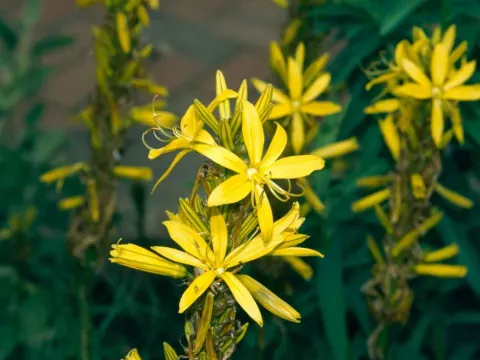
Asphodeline recurva
Asphodeline recurva
Sowing seeds of Asphodeline recurva is most effective when done in the autumn. Cold winter temperatures provide the necessary stratification, which is crucial for breaking seed dormancy and ensuring uniform germination in early spring.
What the section contains
Asphodeline recurva
For spring sowing, seeds must undergo cold stratification in a refrigerator for at least eight weeks. Placing them in a moist, sterile medium at temperatures between 0 and 5 degrees Celsius mimics the natural overwintering process.
The seeds should be sown shallowly, ideally about 1–2 centimeters deep, in a gritty, well-draining substrate. Keep the seedbed lightly moist, avoiding waterlogging which can cause seed rot before germination.
Once seedlings emerge, they should be provided with ample light to prevent stretching. Careful handling is required when transplanting them to individual pots or directly to their permanent garden positions.
Maintaining proper spacing is essential to encourage robust growth. Planting young individuals 30 to 40 centimeters apart allows for adequate airflow around the basal leaves, reducing the risk of fungal infections.
Asphodeline recurva belongs to the Asphodelaceae family and thrives in conditions that mimic its native habitat. It requires a location with full, direct sun for the majority of the day to produce its characteristic flowering stems.
Soil quality is paramount for this species. It demands well-drained, lean soil, such as rocky or sandy loam. Heavy, water-retentive clays must be amended with grit or perlite to prevent root asphyxiation during the wet season.
Water requirements for this plant are relatively low. Once established, the species is remarkably drought-tolerant, requiring irrigation only during prolonged dry spells or the peak of the growing season when the flower spike is elongating.
The plant is hardy and adapts well to temperate climates. However, in regions prone to heavy winter rains, excellent drainage becomes the most important factor in ensuring the survival of the fleshy rootstock.
Maintenance involves minimal intervention. Pruning away spent flower stalks after the seeds have dispersed helps redirect the plant's energy toward root and leaf development for the following year.
The primary threat to the health of Asphodeline recurva is root rot, which is almost exclusively caused by poor soil drainage and waterlogging. Once the root system begins to decay, the plant is difficult to save.
Garden pests such as slugs and snails often find the fleshy basal foliage attractive, especially in the cool, moist conditions of early spring. Using organic barriers or bait traps is a common management strategy.
Fungal leaf spot diseases may appear if the plant is sited in an area with poor air circulation or high humidity. Ensuring that the foliage stays dry and the planting area is open prevents these issues.
Competition from aggressive weeds can stunt the growth of young plants. Mulching with a layer of gravel or small stones can suppress weed growth while simultaneously improving drainage around the crown.
Regular monitoring for signs of stress, such as yellowing leaves or wilting despite adequate moisture, allows for early intervention and correction of environmental conditions to keep the plant vigorous.