
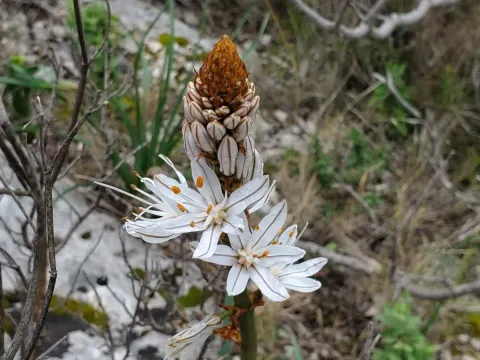
Asphodel
Asphodelus cerasiferus
Asphodelus cerasiferus is a herbaceous perennial belonging to the Xanthorrhoeaceae family. This species is characterized by its tuberous root system, which acts as a primary organ for nutrient storage, allowing the plant to thrive in arid Mediterranean-type environments.
What the section contains
Asphodel
The plant requires full sun exposure to maintain its vegetative vigor and promote abundant flowering. It is highly adapted to rocky or sandy soils with excellent drainage, as waterlogging is detrimental to its physiological functions.
Climatic requirements focus on a mild, wet winter season followed by a prolonged, dry, and warm summer. This cycle is essential for the plant's natural dormancy period, which prevents excessive foliage growth and ensures long-term survival.
Soil pH levels should be maintained in the neutral to slightly alkaline range. High organic content is generally unnecessary and can sometimes encourage fungal issues, so lean, mineral-rich substrates are preferred for cultivation.
Cultivation practices involve minimal intervention after the initial establishment phase. Irrigation should be carefully managed to prevent saturation, and the plant benefits from a resting period with almost no water application during the height of summer.
Fungal pathogens represent the most significant threat to the culture, particularly species that cause crown rot and root decay in poorly drained soils. Managing moisture levels is the most effective preventative measure available.
Pests such as nematodes and bulb-feeding insects can cause severe economic losses by weakening the root system. Proper soil preparation and the use of certified pathogen-free planting material are critical for successful crop management.
Insects like aphids may infest the inflorescence during the spring, which, if left uncontrolled, can severely reduce seed production efficiency. Integrated pest management strategies are recommended to mitigate these risks.
Winter damage is a potential risk in colder climates, where freezing conditions can destroy the crown of the plant. Providing organic mulch can offer protection against temperature fluctuations during the coldest months.
Regular monitoring of field conditions is necessary to detect early signs of stress or infection. By maintaining appropriate spacing between plants, growers can ensure adequate air circulation, which significantly inhibits the spread of airborne spores.