
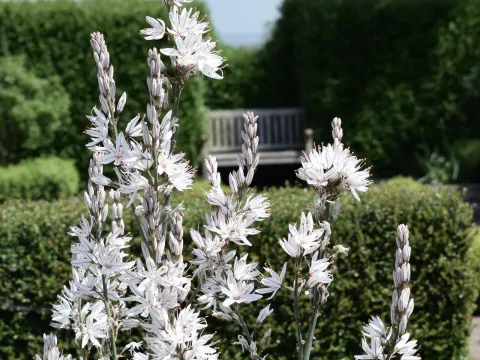
Asphodel
Asphodelus hybrids
Sowing Asphodel seeds is best performed in the autumn, allowing the seeds to undergo natural stratification over the winter months, which significantly improves germination rates in the following spring.
What the section contains
Asphodel
If indoor sowing is preferred, seeds should be placed in well-drained trays using a light, sandy medium. Germination typically requires a temperature range of 18-20 degrees Celsius and stable moisture levels.
Once seedlings emerge, they should be kept in a bright location to prevent etiolation. Slow growth in the first year is a normal characteristic of this species, requiring patience from the grower regarding plant size development.
Vegetative propagation via root division is a viable alternative for maintaining hybrid characteristics. This process is best performed during the plant's dormant stage, usually in late summer or early autumn after the foliage has died back.
Care must be taken when handling the root system, as the fleshy roots are fragile and susceptible to damage. Proper spacing of 30-40 centimeters between plants is recommended to allow for long-term growth and root development.
Asphodel, belonging to the Asphodelaceae family, thrives in open environments with full sun exposure. It is a highly sun-dependent culture, and any restriction in light will negatively impact the structural integrity of its flower stalks.
The ideal soil for Asphodel is gritty, well-draining, and slightly alkaline. High-clay soils should be avoided or amended with gravel and sand to ensure that the root system does not remain in stagnant water, which is the primary cause of root failure.
Regarding water, the plant is remarkably drought-tolerant once established. It requires consistent irrigation during the spring growth phase but should be kept relatively dry during the summer dormancy period.
Fertilization should be kept to a minimum. Asphodel is adapted to nutrient-poor soils; excessive nitrogen input leads to soft, weak stems that are prone to lodging and increased vulnerability to pests.
Climate adaptability is strong in Mediterranean conditions. In colder climates, protection against deep soil freezing is necessary, often achieved by mulching the root zone with straw or horticultural fleece to prevent frost damage to the tubers.
The most significant threat to Asphodel is root rot, typically caused by Pythium or Phytophthora species. These pathogens thrive in waterlogged conditions and can wipe out a plantation if drainage is not managed correctly.
Slugs and snails pose a constant threat to young growth and emerging flower buds. Growers should implement integrated pest management (IPM) strategies, including physical barriers or the strategic use of baits during damp weather conditions.
Aphid infestations on flower spikes can stunt development and act as vectors for viral diseases. Early detection and treatment with insecticidal soaps or systemic pesticides are essential to maintain crop quality.
Viral infections can occasionally occur, characterized by mosaic patterns on the foliage. Since there is no cure for viral plant diseases, infected individuals must be rogued out and destroyed to prevent spread.
Maintaining high hygiene standards by removing dead vegetation at the end of the season reduces the overwintering sites for pests and fungal spores, promoting a healthier crop in the next growing cycle.
Harvesting for seed production should be timed carefully when the capsules begin to brown and split open. It is advisable to collect seeds frequently to prevent natural dispersal onto the field floor.
For ornamental purposes, harvesting flower stalks should be done just as the lower flowers on the spike begin to open. This allows the plant to focus energy back into the root system for the subsequent growing season.
When harvesting tubers for propagation or market, one must wait until the foliage has completely turned yellow and died back, indicating that the plant has entered dormancy and energy is stored in the tubers.
Clean tools are mandatory during any harvesting or propagation activity to prevent the transmission of fungal pathogens between individual plants.
Post-harvest handling of tubers requires a cool, dry, and ventilated storage environment. They should be kept in a substrate that prevents excessive dehydration while ensuring no moisture build-up that could trigger decay.