
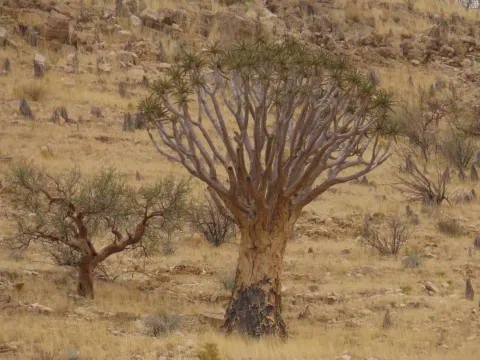
Aloidendron
Aloidendron
Aloidendron is a genus of arborescent succulents belonging to the Asphodelaceae family. These plants are characterized by their woody stems, distinguishing them from common herbaceous Aloe species. They are known for their architectural form and longevity.
What the section contains


Aloidendron
The origin of these plants is traced to Southern Africa, where they thrive in arid environments. In agricultural settings, they require well-draining, rocky soils that prevent root saturation and ensure proper gas exchange for the roots.
Exposure to direct sunlight is essential for the healthy development of Aloidendron. When cultivated in greenhouses, they need high-intensity light levels to maintain their structural integrity and prevent etiolation.
Watering management is the most critical aspect of their cultivation. Irrigation must be performed only when the substrate has completely dried out to mitigate the risk of physiological disorders and fungal infections.
The preferred substrate should mimic their native soil conditions: a porous, mineral-rich mix with high sand or gravel content to ensure optimal aeration and drainage capabilities.
Root rot, caused by excessive moisture in the substrate, remains the most significant threat to Aloidendron health. Maintaining an appropriate irrigation schedule is vital to avoid this condition.
Mealybugs are common pests that infest the leaf axils and stems. These insects feed on plant sap, leading to stunted growth and potentially facilitating secondary viral or fungal infections in the affected areas.
Scale insects can also infest the succulent leaves, causing damage that manifests as yellow spots or necrotic lesions. Integrated pest management strategies, including the use of systemic insecticides, are recommended.
Poor ventilation in greenhouse environments can contribute to the development of powdery mildew. Ensuring adequate airflow helps to lower humidity levels and prevent the spread of spores between individual plants.
Regular monitoring of the root system and foliage is necessary to detect early signs of infestation. Early intervention remains the most effective method for managing health risks in large-scale succulent production.