
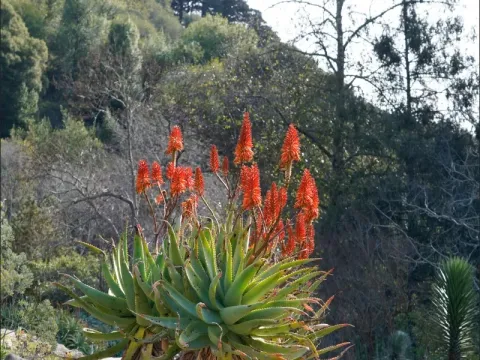
Aloe kedongensis
Aloe kedongensis
Aloe kedongensis is a succulent perennial plant belonging to the Asphodelaceae family. Native to Kenya, this species is well-adapted to rocky habitats and semi-arid environments. It is known for its branching stems that can reach significant heights, creating a natural hedge in its native range.
What the section contains
Aloe kedongensis
Successful cultivation of Aloe kedongensis requires high light levels, preferably full sun, to maintain its compact growth habit. If grown indoors, a south-facing window is essential. Insufficient light leads to etiolation, where the stems become weak, elongated, and prone to breakage.
The soil must be highly porous and well-draining. A mix consisting of cactus potting soil combined with perlite, pumice, or coarse sand is recommended to ensure that water does not accumulate around the roots. Using a pot with ample drainage holes is a fundamental requirement.
Watering should be deep but infrequent. Allow the soil to dry out completely between watering sessions during the growing season. In winter, reduce watering significantly, as the plant enters a period of dormancy and is highly susceptible to rot during cool, damp conditions.
Temperature management is critical for the health of this succulent. It thrives in warm temperatures, typically between 20°C and 30°C. While it can tolerate short bursts of lower temperatures, it is not frost-hardy and should be moved to a protected location during winter months.
Root rot is the most common threat to Aloe kedongensis, usually caused by overwatering or poor soil drainage. This condition often results in the softening and blackening of the stem base, making it difficult to save the plant once it has progressed.
Common insect pests include mealybugs and spider mites. Mealybugs often hide in the crevices between leaves, while spider mites leave fine webbing on the plant surface. Both pests can be controlled with horticultural oils or targeted insecticidal soaps.
Fungal infections can also occur due to high humidity and poor ventilation. Keeping the plant in an area with good air circulation helps prevent the development of powdery mildew and other foliar diseases.
Damage to the leaf epidermis can provide an entry point for bacteria. Always ensure that cutting tools are sterilized before performing any pruning to reduce the risk of spreading pathogens through the vascular system of the plant.
Monitoring the plant for yellowing leaves or a loss of firmness in the stems is recommended. These signs often act as early warnings that the plant is experiencing stress from either improper watering or pest infestation.