
Aloe jucunda
Aloe jucunda
Description
Growing requirements
Aloe jucunda is a small, slow-growing succulent belonging to the Asphodelaceae family. Native to the rocky highlands of Somalia, this species is highly adapted to extreme heat and prolonged periods of drought, making it an excellent candidate for xeriscaping.
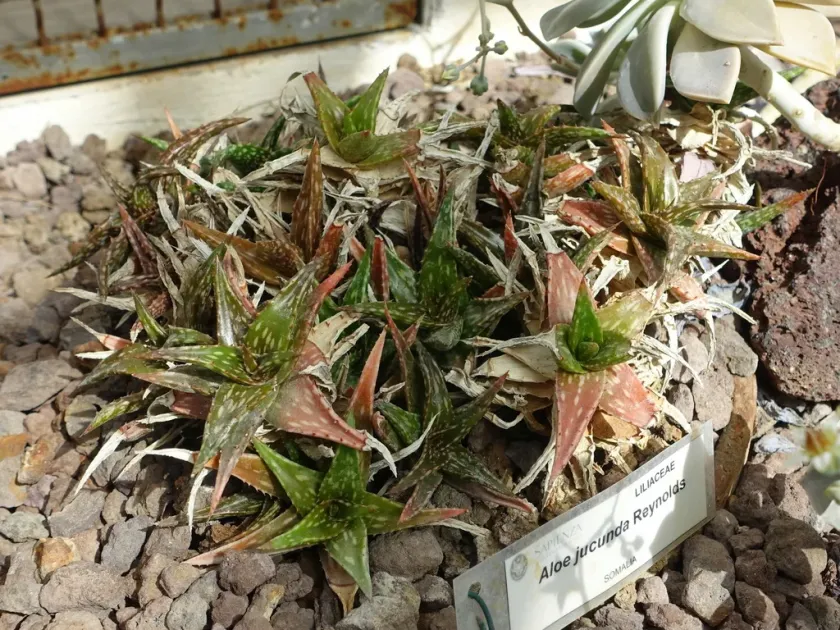
Botanically, it forms dense, low-growing rosettes of dark green leaves adorned with white spots and small marginal spines. During the flowering period, it produces attractive spikes with pale pink or salmon-colored tubular flowers, which are characteristic of the genus.
Successful cultivation requires high light intensity. Placing the plant in a bright location, preferably with several hours of direct morning sunlight, helps maintain its compact habit and intense leaf coloration, preventing the etiolation commonly seen in low-light environments.
The choice of soil is crucial for this species. A specialized succulent mix composed of pumice, coarse sand, and a small amount of organic potting soil provides the necessary porosity. This allows water to drain quickly, mimicking the natural well-drained slopes of its native range.
Regarding irrigation, it follows a strict cycle of wet and dry periods. During the active growing season, water thoroughly only when the growing medium is completely dry. In winter, the plant enters dormancy, requiring very little moisture to prevent potential cellular damage.
Main diseases and pests
The most common cause of failure when growing Aloe jucunda is overwatering, which rapidly leads to root and crown rot. Because the plant stores water in its leaves, it can easily tolerate drought but will succumb to fungal pathogens almost instantly in waterlogged soil.
Mealybugs are the primary pest affecting this succulent. They tend to cluster deep within the rosette, often protected by the dense leaves, making them difficult to detect. Regular inspection and the use of insecticidal soaps are effective methods for controlling these infestations.
Spider mites can also become a problem, particularly in environments with poor air circulation and low humidity. Their presence is usually indicated by fine webbing and stippling on the leaf surface, which can be mitigated by increasing humidity and cleaning the leaves.
Fungal leaf spot can occur if the plant is exposed to overhead watering, especially in cool or humid conditions. To avoid this, water should be applied directly to the soil surface rather than splashing the foliage, ensuring the leaves remain dry throughout the growth cycle.
Root system health should be periodically monitored through repotting. If the roots appear stunted or show signs of browning/mushiness, the plant should be removed from the pot, dead tissue trimmed away, and the substrate completely replaced to encourage healthy new root development.