
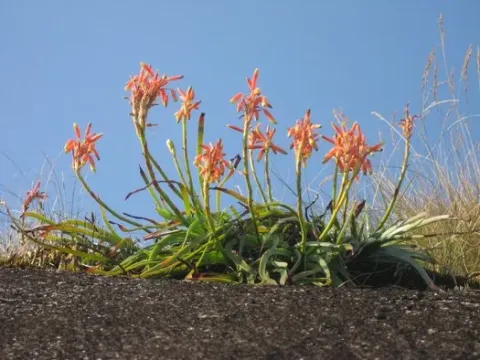
Aloe inyangensis
Aloe inyangensis
Aloe inyangensis is a distinct species of succulent belonging to the Asphodelaceae family. Native to the mountainous regions of Zimbabwe and Mozambique, it is well-adapted to rocky environments and harsh climate conditions.
What the section contains
Aloe inyangensis
The plant thrives in full sun exposure, which is essential for maintaining its robust structure and characteristic leaf color. Providing high light intensity ensures that the rosette stays compact and prevents etiolation.
Regarding soil requirements, this species necessitates a highly porous and gritty substrate. A mixture consisting of coarse sand, pumice, and minimal organic matter is ideal for replicating its natural rocky habitat.
Watering practices should be strictly controlled, following the soak-and-dry method. During the active growing season, allow the soil to become completely dry between waterings to prevent root system suffocation.
Climate control is crucial, especially during the winter dormancy period. The plant prefers cooler temperatures, around 10 to 12 degrees Celsius, which mimics the environment of its high-altitude native range.
The most significant threat to Aloe inyangensis is root rot caused by stagnant moisture. Once the roots are damaged by constant dampness, recovery is difficult, making drainage the highest priority in cultivation.
Mealybugs are a common pest problem, particularly when air circulation is poor. They thrive in protected spots between leaves, where they feed on plant sap and can weaken the specimen significantly if ignored.
Scale insects can also attach themselves to the foliage, appearing as small, raised bumps. These pests can be manually removed or treated with horticultural oils to prevent them from sapping the plant's vigor.
Fungal infections may develop if the plant is kept in humid and stagnant conditions. Ensuring good ventilation and avoiding water accumulation in the center of the rosette are key preventive measures.
Spider mites represent a potential issue in extremely dry environments, such as during winter indoors with heating. Monitoring for tiny webs on the leaves is essential to detect an infestation early and treat it promptly.