
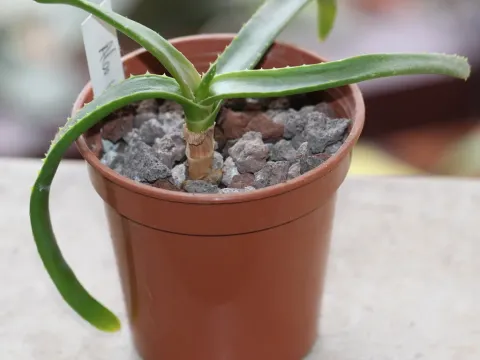
Aloe johannis
Aloe johannis
Aloe johannis is a distinct succulent species within the Asphodelaceae family. Native to arid regions, it has adapted to harsh environmental conditions through the development of water-storing tissues in its leaves, which allow it to survive extended periods of drought in its natural habitat.
What the section contains
Aloe johannis
Successful cultivation of Aloe johannis requires a well-draining mineral-rich substrate. The soil mixture should ideally consist of coarse sand, perlite, and volcanic grit to ensure that water does not accumulate around the roots, as moisture retention is a primary concern for this species.
The plant thrives in high-light environments. For optimal physiological function, it requires exposure to bright, direct light for several hours daily. If grown in sub-optimal lighting, the plant may exhibit etiolation, leading to structural instability and a decrease in photosynthetic efficiency.
Water management is the most critical component of its agronomy. Watering should follow the soak-and-dry method, where the substrate is completely saturated and then allowed to dry out entirely before the next irrigation event, preventing the development of bacterial and fungal pathogens.
Temperature management follows a seasonal cycle. During the growing season, temperatures between 20–28 degrees Celsius are ideal. A cooler rest period during winter, with temperatures dropping to 12–15 degrees Celsius, is recommended to mimic natural conditions and promote future vitality.
The most significant threat to Aloe johannis is the development of root rot, typically caused by waterlogged soil conditions. This condition is often fatal and requires immediate repotting into dry, sterile media to save the plant.
Pest pressures include mealybugs and scale insects that colonize the leaf crevices. Integrated pest management strategies, such as physical removal or the application of specialized horticultural oils, are essential to maintain plant health and prevent the spread of infestations.