
Aloe horombensis
Aloe horombensis
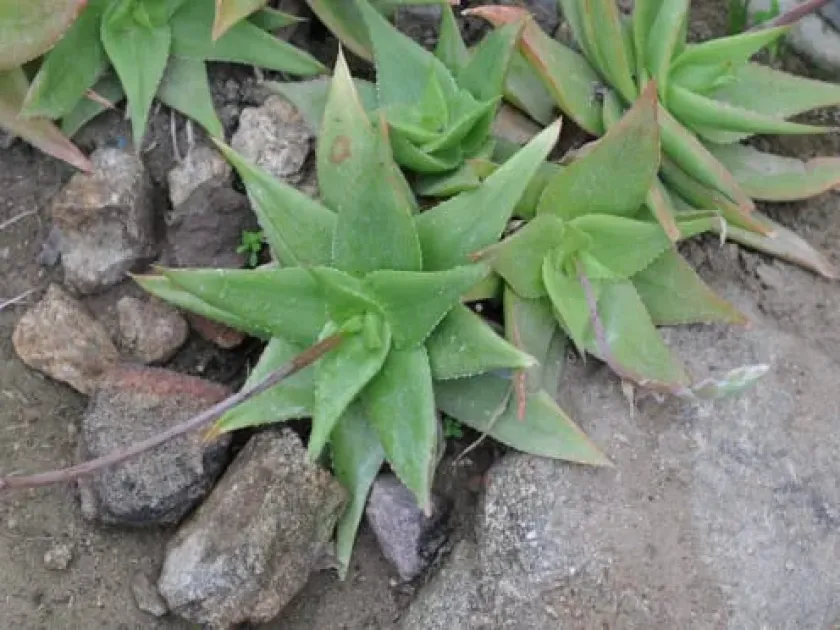
Description
Growing requirements
Aloe horombensis is a distinctive succulent species belonging to the Asphodelaceae family. Native to the rocky landscapes of Madagascar, this plant has evolved to thrive in harsh, resource-poor environments with high solar irradiance.
The botanical structure of the plant features a rosette of fleshy, succulent leaves adapted for water storage. This evolutionary adaptation allows the species to survive prolonged periods of drought in its natural habitat.
In terms of cultivation requirements, this plant demands high light intensity. It is best suited for bright, sunny spots where it can receive several hours of direct light, preventing etiolation and preserving its natural, compact growth form.
Soil composition must be extremely porous and well-draining. A mix consisting of mineral components, such as pumice, perlite, and coarse sand, is recommended over heavy organic potting soil to ensure optimal aeration.
Watering practices are the most critical aspect of maintenance. Owners must strictly adhere to the "soak and dry" method, ensuring the substrate is completely dry before applying water, as moisture accumulation around the base causes rapid decay.
Main diseases and pests
The primary threat to Aloe horombensis is root rot caused by stagnant moisture. Once the root system is compromised, the plant struggles to recover, making prevention through soil management the most effective strategy.
Mealybugs are common pests that colonize the dense leaf rosettes. These insects feed on plant sap and can weaken the specimen if not managed early through manual removal or the application of horticultural soaps.
Fungal infections, which manifest as soft, discolored spots on the leaves, are frequently observed when humidity levels are too high. Improving airflow around the plant can significantly mitigate the development of these pathogens.
Spider mites represent a secondary threat, particularly in dry indoor environments with poor ventilation. Regular inspection of the leaf undersides is recommended to catch infestations before they spread across the entire collection.
Inappropriate fertilizer use, specifically high-nitrogen formulas, can lead to unnatural, rapid growth that lacks structural integrity. Such plants become highly susceptible to environmental stress and opportunistic pest attacks.