
Aloe hoffmannii
Aloe hoffmannii
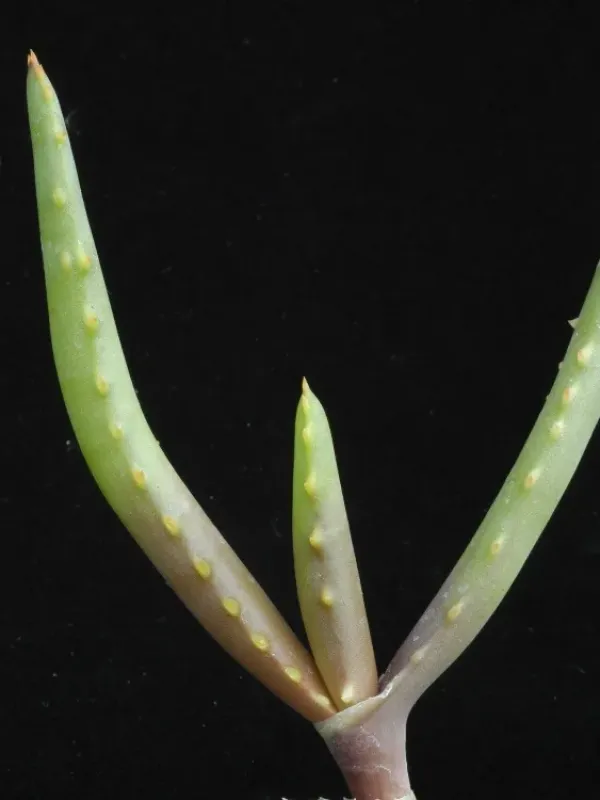
Description
Sowing dates
Propagation of Aloe hoffmannii is most commonly achieved through vegetative means using offsets that form at the base of the mother plant. The optimal time for dividing and repotting is during the spring when the plant enters its active growth phase.
When using the seed propagation method, sow seeds in a loose, sandy substrate under glass or plastic film. It is crucial to maintain a temperature between 22 and 25 degrees Celsius for successful germination.
Once the first true leaves appear, seedlings should be pricked out into individual containers. Young plants require gradual adaptation to direct sunlight to prevent leaf scorching.
The soil used for planting must be highly well-drained. Standard garden soil is unsuitable due to the high risk of root rot occurring from stagnant moisture.
It is recommended to use specialized succulent mixes with the addition of coarse sand, perlite, and small gravel to ensure optimal aeration and drainage.
Growing requirements
Aloe hoffmannii is a member of the Asphodelaceae family and is endemic to Yemen. In its natural habitat, it grows on rocky slopes, which defines its high level of drought tolerance.
This species is extremely photophilous and requires bright light throughout the day. If light levels are insufficient, the leaf rosette will become etiolated, losing its natural compactness and ornamental value.
The plant does not tolerate high air humidity. In indoor environments or greenhouses, good air circulation is necessary to prevent the development of fungal infections.
The temperature regime should be moderately warm in summer and cool in winter. Temperatures dropping below 10 degrees Celsius may lead to tissue damage, as this is a heat-loving species.
Watering must be strictly controlled: the soil ball should dry out completely between waterings. During winter, watering is reduced to a minimum to maintain plant dormancy.
Main diseases and pests
The primary biological threat to this culture is root rot caused by waterlogging of the substrate. Affected parts are often impossible to recover, making preventative measures essential.
Among pests, mealybugs are frequently found on the leaves. They feed on the sap of young shoots, leaving behind a characteristic white, cotton-like substance.
Scale insects also pose a serious danger, as their hard protective shells make them resistant to most contact insecticides.
Spider mites may attack the plant if the air is too dry and stagnant. Systemic acaricides are recommended to control these infestations effectively.
- Regular inspection of leaves for pest presence.
- Strict adherence to the watering schedule.
- Usage of sterile growing medium during potting.
- Provision of high-quality drainage systems.
- Isolation from infected indoor plant collections.