
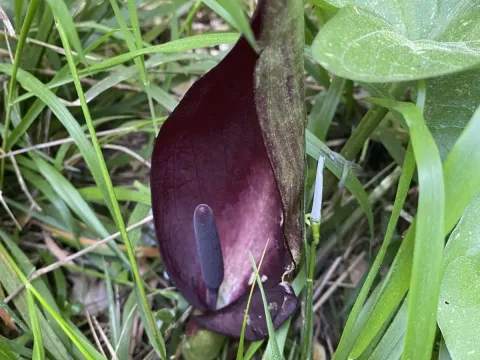
Arum elongatum
Arum elongatum
Arum elongatum is a perennial herbaceous plant belonging to the Araceae family. This species is native to Southeast Europe and the Caucasus region, where it typically inhabits shady, moist woodlands and shrubby areas.
What the section contains
Arum elongatum
The plant features a distinct tuberous rhizome and arrow-shaped leaves that emerge in early spring. The inflorescence consists of a spadix enclosed by a large, showy spathe, which is a characteristic morphological trait of the genus Arum.
Successful cultivation requires soil that is rich in organic matter, moist, and well-drained. The plant thrives in neutral to slightly alkaline pH levels and is highly intolerant of waterlogged conditions that can cause tuber rot.
It prefers partial to deep shade, mimicking its natural habitat beneath the forest canopy. While it is relatively hardy, it requires consistent moisture during its active growing season to ensure healthy development and proper foliage formation.
In terms of economic value, Arum elongatum is primarily cultivated for ornamental purposes in botanical gardens and shaded landscape designs. While the tubers contain starch and chemical compounds, their raw state is toxic, limiting direct consumption without professional processing.
Tuber rot, often induced by fungal pathogens in poorly drained soils, remains the most significant threat. Ensuring adequate soil aeration and minimizing moisture accumulation during dormant periods is critical for plant longevity.
Slugs and snails are major pests that target the young, tender leaves during the spring. Implementing physical barriers or using appropriate molluscicides is recommended to prevent significant aesthetic and structural damage to the foliage.
Fungal leaf spot diseases can affect the plant during periods of prolonged high humidity. Applying preventative fungicides and ensuring proper spacing between plants can significantly reduce the risk of infection spread.
Aphids occasionally colonize the flower stems and the undersides of leaves. Early detection and treatment with insecticidal soaps or systemic pesticides are essential to manage these populations before they impact plant vitality.
Root-knot nematodes can weaken the root system, causing stunted growth and chlorosis. Maintaining soil health and avoiding the replanting of Arum in previously infested areas are the primary strategies for managing these soil-borne threats.