
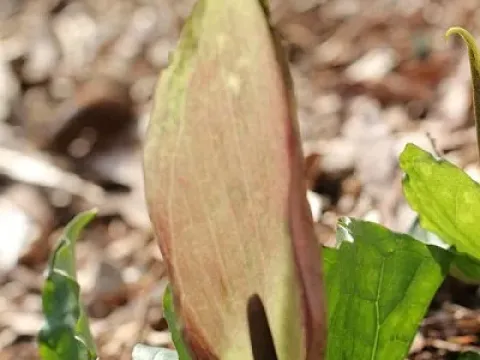
Arum cyrenaicum
Arum cyrenaicum
Arum cyrenaicum is a perennial tuberous plant belonging to the Araceae family. It originates from the Cyrenaica region, and its growth cycle is adapted to climates with distinct dry summers and wet, mild winters.
What the section contains
Arum cyrenaicum
Planting typically occurs in late summer or early autumn when the tubers are dormant. The tubers should be placed at a depth of 10 to 15 centimeters to ensure stability and proper moisture balance during the rooting phase.
Propagation is primarily achieved through the separation of offset tubers. Seed propagation is also possible, though it requires specific stratification methods and several years of growth before the plant reaches maturity and produces flowers.
The soil preparation for sowing must focus on aeration. Integrating perlite or coarse sand into the growing medium helps prevent the tuber from sitting in stagnant water, which is a common cause of failure in this species.
Strategic placement in the garden or greenhouse is crucial, as the plant needs sufficient space for its foliage to spread once the growing season begins in autumn.
This species demands well-draining, nutrient-rich soil. A slightly alkaline to neutral pH is preferred, as high acidity can inhibit the growth of healthy tubers in many Arum species.
Partial shade is the ideal environmental condition. While the plant can tolerate light, intense direct sun should be avoided to prevent leaf scorching, particularly during the transition from winter to spring.
Water management is the most critical agricultural requirement. The soil should be kept moist throughout the winter and spring but allowed to dry out completely during the summer months to simulate the plant's native dormancy period.
In terms of temperature, Arum cyrenaicum is not frost-hardy. It thrives in regions where winter temperatures remain above freezing or can be grown in pots that are moved indoors before the first frost.
Air ventilation is essential for preventing fungal issues. In greenhouse environments, ensure that there is enough air movement to prevent the accumulation of moisture on the foliage.
Fungal rots are the primary threat to the tubers. Excess moisture in the soil, especially during the dormant season, will almost certainly lead to the decay of the underground storage organs.
Slugs and snails are major pests, especially during the emergence of new growth in the autumn and spring. Protective barriers or organic molluscicides are often used to prevent significant foliage damage.
Aphids and mites can become an issue when plants are grown in confined or poorly ventilated conditions. Regular monitoring of the undersides of the leaves is advised to catch infestations early.
Root damage caused by soil-borne pathogens can be mitigated by ensuring that the potting mix is sterile and that drainage holes are not blocked in container-grown plants.
If decay is discovered on a tuber, it is recommended to cut away the infected tissue and treat the healthy part with a fungicide before allowing it to callus over in a dry environment.