
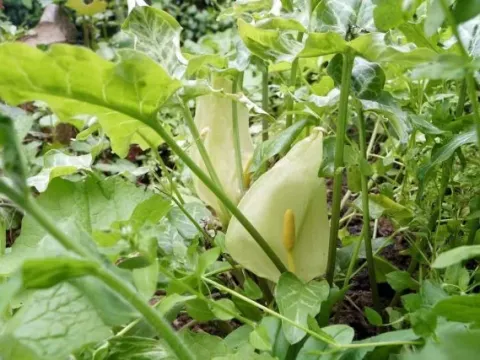
Arum hybrids
Arum hybrids
Arum hybrids, which belong to the Araceae family, are typically planted during the dormant phase in autumn. The tubers or rhizome segments should be placed in well-drained, fertile soil at a depth of 10 to 15 centimeters to ensure optimal winter survival and spring sprouting.
What the section contains
Arum hybrids
In regions with harsh winters, planting can be delayed until early spring after the risk of frost has passed. However, autumn planting is generally preferred for root establishment. A spacing of 30–40 centimeters between plants is essential for full foliage development.
Propagation by seed is possible; seeds should be sown immediately after maturation in a light, humus-rich substrate. Seedlings are slow to develop and require protected nursery conditions for the first two years before transplanting to a permanent location.
The chosen site must offer partial shade, as direct intense sunlight can scorch the leaves of hybrid varieties. Protection from strong winds is also critical to maintain the structural integrity of the large, broad leaves.
Preparing the soil involves deep cultivation and the incorporation of compost or aged manure to ensure a loose, crumbly texture that prevents waterlogging while maintaining necessary nutrient levels.
Arum hybrids thrive in nutrient-rich, moist soils with a slightly acidic or neutral pH. Effective drainage is a non-negotiable requirement, as stagnant water is the primary cause of tuber rot and plant failure in this species.
Consistent soil moisture must be maintained throughout the growing season. While the plants require moisture, they should not be allowed to sit in waterlogged soil, as this promotes bacterial and fungal colonization of the root system.
Winter protection is necessary in colder climates; a thick layer of mulch, such as dry leaves, wood chips, or peat, should be applied to the planting area to prevent deep soil freezing and potential damage to the tubers.
The plants prefer moderate temperatures, ideally between +18 and +25 degrees Celsius. In extremely hot summers, increased irrigation and high humidity around the foliage are beneficial to prevent leaf dehydration.
Regular fertilization with balanced, slow-release fertilizers is recommended, though high nitrogen content should be avoided to prevent weak, leggy growth that is more susceptible to disease and pest damage.
Fungal pathogens, particularly root rot, represent the most significant threat to Arum hybrids. These diseases often emerge when soil moisture is poorly managed, necessitating the removal of affected tissues and the application of appropriate fungicide treatments.
Insect pests, including aphids and spider mites, can severely stress the plants, especially in dry conditions. Monitoring the underside of the foliage is crucial for early detection, followed by the use of insecticidal soaps or biological controls.
Slugs and snails frequently target the succulent young growth of Arum hybrids during damp periods. Implementing physical barriers or using pet-safe bait can significantly reduce the damage caused by these garden mollusks.
Viral infections may appear as mosaic patterns or leaf curling. Since there is no cure for viral diseases, infected plants must be removed and destroyed immediately to prevent spread through the garden via sap-sucking insects.
Good agricultural hygiene, including the sterilization of pruning tools and proper weed control, serves as the first line of defense against the majority of threats facing this unique ornamental crop.