
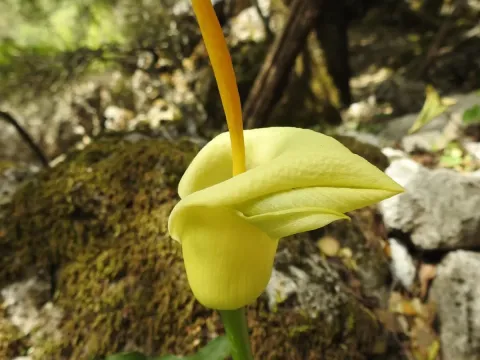
Arum creticum
Arum creticum
Planting Arum creticum tubers is best performed in early autumn. The soil should be cool, typically around 10–12 degrees Celsius, allowing the roots to establish themselves before the onset of winter dormancy.
What the section contains
Arum creticum
Propagation via seeds requires a well-draining, sterile substrate. Sowing should occur shortly after seed maturity, maintaining consistent moisture to encourage germination in the following spring season.
Tubers should be buried at a depth of 10 to 15 centimeters. In heavy soil types, providing a base layer of horticultural grit is essential to ensure proper drainage and prevent water accumulation beneath the tuber.
For container gardening, use a porous potting mix that mimics Mediterranean soil conditions. Ensure the pots have large drainage holes to prevent the stagnant water that often leads to tuber rot.
Maintain a spacing of at least 30 centimeters between individual plants. This spacing is vital for air circulation, which helps reduce the humidity levels around the foliage during the early spring growth phase.
Arum creticum, a member of the Araceae family, thrives in fertile, free-draining soils with a neutral to slightly alkaline pH. It is highly susceptible to rot, making effective drainage the most critical aspect of site selection.
The plant prefers sunny to semi-shaded positions that provide protection from harsh, drying winds. Its natural distribution across Crete and the Aegean islands indicates a preference for mild winters and hot, dry summers.
In regions with colder climates, thick organic mulch should be applied before the first frosts. This thermal protection layer is crucial to prevent the tubers from freezing while dormant during the winter months.
Irrigation must be carefully managed; provide water during the active growing season, but withhold all water once the leaves begin to yellow and wither. This dry period is essential for the plant to complete its lifecycle.
Fertilization with a balanced, slow-release fertilizer can be beneficial when signs of new leaf emergence appear in early spring. Avoid heavy nitrogen applications which may promote excessive foliage growth at the expense of floral development.
The primary concern in managing Arum creticum is fungal decay, particularly Fusarium rot of the tubers. This is almost always triggered by overly wet soil conditions, especially during cool and damp seasons.
Gastropods, including slugs and snails, are frequent pests that feed on the succulent foliage. Monitoring the base of the plant during moist spring weather is necessary to protect the emerging shoots from extensive damage.
Virus-like symptoms such as mosaic patterns on the leaves often indicate systemic issues that cannot be cured. Removal and safe destruction of affected plants are recommended to protect the remainder of the crop.
Damage caused by digging or heavy cultivation tools can predispose tubers to bacterial rot infections. Hand-weeding around the immediate area is always safer than mechanical cultivation near the base of the plant.
To ensure plant health, utilize a strict hygiene protocol in the garden. This includes cleaning tools after working with diseased plants and ensuring that all newly acquired tubers are inspected for signs of damage or decay before planting.